Skip to content
  • Prijzen

Converteer cursief naar tekst

Upload een foto van cursief handschrift - de AI zet het in seconden om naar digitale tekst.

Cursief converter300+ AI-modellen100+ talenGratis uit te proberen

Sleep hier een afbeelding

Selecteer een bestand...

PNG of JPG tot 10 Mb

Wolpi
AI Assistant

Door een afbeelding te uploaden, accepteert u onze voorwaarden en ons privacybeleid.

Deze demo gebruikt Text Titan, ons krachtigste AI-model. Maak een gratis account om elke maand 50 credits te krijgen.

500 000+Gebruikers wereldwijd
200+ miljoenPagina's verwerkt
300+Openbare AI-modellen
100+Ondersteunde talen

How to convert cursive to text

Three steps — no software to install, no account required for the demo.

1

Upload a photo or scan

Drag a phone photo, scan, or screenshot of cursive handwriting into the box above. JPG, PNG, and PDF all work. No special equipment needed — a phone camera is enough.

2

AI reads the cursive

The AI analyzes your image, detects the text lines, and converts the cursive handwriting to digital text. It handles connected letters, faded ink, and messy handwriting that standard OCR cannot read.

3

Copy, edit, or export

Your text appears in seconds. Copy it to the clipboard, paste it into a document, or create a free account to export as TXT, DOCX, or PDF.

Wat is cursief?

Miljoenen documenten geschreven in cursief - de meeste nog steeds ongelezen

Cursief was de dominante handschriftstijl in Europa en Amerika van de 17e eeuw tot ver in de 20e. Brieven, dagboeken, gerechtsdocumenten, kerkboeken en administratieve documenten waren allemaal geschreven in vloeiende, verbonden scripts. Vandaag de dag bevinden miljoenen van deze documenten zich in archieven en familieveramelingen - voor steeds minder mensen leesbaar. Transkribus maakt hen weer leesbaar.
Engels cursief, copperplate en running hand
Duitse Kurrent en Sütterlin (1500s-1940s)
Frans, Italiaans, Spaans en Nederlands cursief stijlen
Administratieve en juridische handen uit alle eeuwen
Persoonlijke brieven, dagboeken en familiedocumenten
Voorbeeld van historisch cursief handschrift

Hoe het werkt

AI leest cursief - niet door letters te matchen, maar door handschrift te leren

Standaard OCR faalt op cursief omdat het probeert individuele tekens tegen vaste sjablonen te matchen. Cursieve letters verbinden, overlappen en variëren van schrijver tot schrijver - er zijn geen vaste sjablonen. Transkribus hanteert een ander benadering: neurale netwerken getraind op miljoenen handgeschreven woorden die leren cursief te lezen op de manier van een mens - door patronen over hele regels te herkennen.
Neurale netwerken getraind op 30+ miljoen handgeschreven woorden
Leest verbonden, overlappende en onregelmatige lettervormen
Lay-outanalyse detecteert automatisch regels, kolommen en marginalia
Werkt op vervaagde inkt, beschadigd papier en lage contrastscans
Betrouwbaarheidsscores laten u nauwkeurigheid voor elke regel beoordelen
Converting a phone photo of cursive handwriting to digital text

AI-modellen

300+ openbare modellen voor verschillende cursieve stijlen
Elk schrijver's cursief is anders - en dat geldt ook voor onze AI-modellen. De Transkribus-gemeenschap heeft meer dan 300 openbare modellen getraind voor specifieke scripts, talen en documenttypen. Vind er een die bij uw documenten past, of gebruik Text Titan I, ons topmodel dat de meeste cursieve stijlen direct verwerkt.
Text Titan I: algemeen model voor cursief en druk
Gespecialiseerde modellen voor Kurrent, Sütterlin, copperplate en meer
Door de gemeenschap getrainde modellen die gratis over het platform worden gedeeld
Filter op taal, eeuw en scripttype
Modellen verbeteren voortdurend naarmate meer trainingsgegevens worden toegevoegd
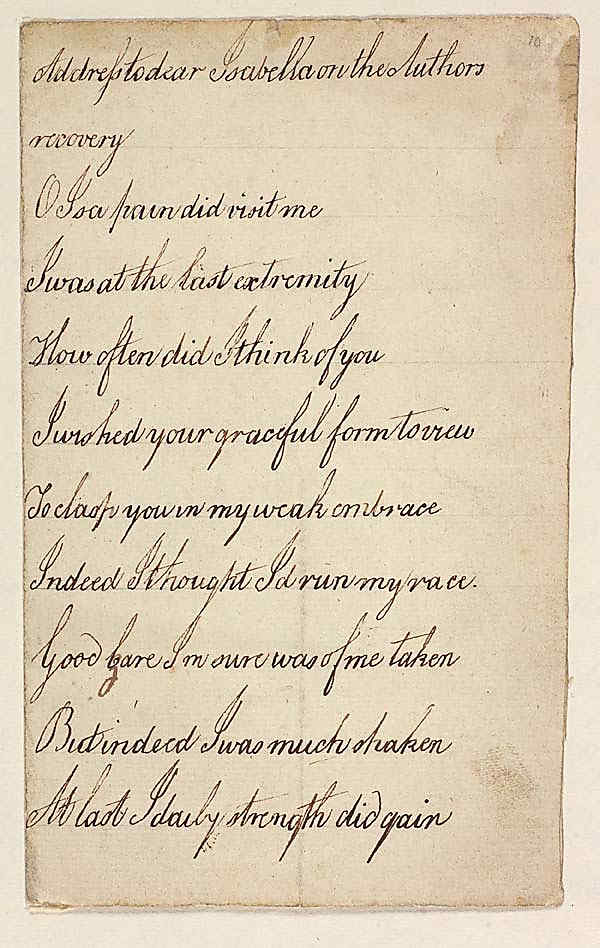
Personal letters, diaries, and family documents in any language
Document
Addres to dear Isabella on the Authors
recovery
O Isa pain did visit me
I was at the last extremity
How often did I think of you
I wished your graceful form to view
To clasp you in my weak embrace
Indeed I thought Id run my race
Good Care Im sure was of me taken
But indeed I was much shaken
At last I daily strength did gain

Comparison

Cursief converter: Transkribus vs. standaard OCR

Standaard OCR is ontworpen voor gedrukte tekst. Transkribus is ontworpen voor handschrift.

FeatureTranskribusStandaard OCR
Cursief handschrift Yes No
Verbonden lettervormen Yes No
Historische scripts (Kurrent, Sütterlin) Yes No
Gedrukte tekst Yes Yes
Aangepaste modeltraining Yes No
Lay-outanalyse Yes Limited
100+ talen Yes Limited
Europese hosting (AVG) Yes Limited
European hosting (GDPR) YesVaries

Vergelijking op basis van algemene OCR-diensten. De mogelijkheden kunnen per aanbieder verschillen.

Aangepaste training

Train de AI op uw specifieke cursieve handschrift

Openbare modellen leveren direct sterke resultaten. Maar als u nog hogere nauwkeurigheid nodig heeft voor een specifieke schrijver, script of documentenverzameling, kunt u een aangepast AI-model op uw eigen gegevens trainen. Transkribus verzorgt de trainingsinfrastructuur - u geeft alleen de getranscribeerde pagina's.
Trainen met slechts 50 getranscribeerde pagina's
Verfijn op uw specifieke schrijver of cursieve stijl
Modellen verbeteren naarmate u meer trainingsgegevens toevoegt
Deel modellen met uw team of de gemeenschap
Models improve continuously as more training data is contributed
Een aangepast cursief herkenningsmodel trainen

Batch processing

Need to convert hundreds of cursive pages?

The demo above is great for a quick translation of a single page. But if you have a collection — a box of family letters, a research archive, a stack of historical records — the full Transkribus platform lets you process them all at once. Upload entire folders, let the AI work through them, then search, edit, and export the results.
Batch upload — convert hundreds of cursive pages at once
Full-text search across all your converted documents
Built-in editor to correct and refine results
Export as TXT, DOCX, PDF, or structured XML
Train a custom model on your specific writer's handwriting for even higher accuracy
Transkribus platform for batch cursive to text conversion

Vertrouwd door toonaangevende instellingen wereldwijd

Uw documenten, uw gegevens, uw controle.

Transkribus wordt gebouwd en gehost in Europa door een coöperatief van 250+ instellingen.

Volledige gegevenseigendom

Uw documenten en transcripties zijn van u. Verwijder op elk moment.

Gehost in Europa

Alle verwerking op onze eigen servers in Oostenrijk. AVG-compliant.

Gebouwd voor de lange termijn

Een coöperatief, geen startup. 250+ mede-eigenaren zorgen voor continuïteit.

Frequently asked questions about cursive conversion

Yes. Transkribus uses neural networks trained on millions of handwritten words to read cursive. Unlike standard OCR, which only works on printed text, our AI was specifically built to handle connected letters, varying handwriting styles, and historical scripts. You can try it right now — upload a photo at the top of this page and see the result in seconds, no signup needed.

Upload a photo or scan of the cursive handwriting to the demo at the top of this page. The AI reads the cursive and converts it to editable digital text. You can then copy the text, paste it into a document, or create a free account to export it as TXT, DOCX, or PDF. It works directly in your browser — no software to install.

Yes. The demo on this page is completely free to use — no account required. You can convert several pages of cursive right here. For larger projects, create a free account to get 50 credits every month (enough for about 50 pages). No credit card required.

Yes. Transkribus works with phone photos, scans, screenshots, and PDFs. You don't need a professional scanner — just take a clear photo with your phone camera and upload it. The AI handles different lighting conditions, paper types, and image qualities.

Transkribus supports virtually all Latin-script cursive styles: English cursive and copperplate, German Kurrent and Sütterlin, French, Italian, Spanish, and Dutch cursive, plus administrative and legal hands from any century. It also reads Russian cursive, Cyrillic handwriting, Arabic scripts, and many more — over 100 languages in total. There are 300+ specialized AI models for specific scripts and time periods.

Accuracy depends on the quality of the image and the handwriting. For clean scans and legible cursive, the AI typically achieves 95–99% character accuracy. Difficult handwriting, faded ink, or damaged paper may produce lower accuracy — but still far better than what standard OCR can deliver. You can also train a custom AI model on your specific writer's handwriting to improve accuracy further.

Yes — this is one of Transkribus' core strengths. The platform was originally developed for historical document research and has specialized AI models for scripts dating back to the 1500s. It handles old German Kurrent, Sütterlin, 18th-century copperplate, colonial-era American handwriting, and many other historical cursive styles that are difficult to read even for humans.

Standard OCR (like the text recognition in Google Drive or Adobe Acrobat) is designed for printed text. It works by matching individual characters against fixed templates — which fails on cursive, where letters connect and overlap. Transkribus uses a fundamentally different approach: handwriting-specific neural networks trained on millions of handwritten words. This is called HTR (Handwritten Text Recognition), not OCR.

Klaar om uw cursieve documenten te converteren?

Maak een gratis account aan om cursief naar tekst te converteren, aangepaste modellen te trainen en het volledige platform te ontgrendelen.

50 gratis credits elke maand - Geen creditcard nodig

200M+Pagina's verwerkt
500K+Gebruikers wereldwijd
300+Openbare AI-modellen