What is citizen science?

Citizen science, community science, crowdsourcing science, volunteer monitoring — however you want to call it, this type of scientific research always centres around one basic principle: the data collection is done not by professional scientists but by members of the public. These “citizen scientists” willingly give up their free time to help collect and collate data for research projects, making it possible to process a much larger amount of data than would normally be possible.
The Transkribus platform has been in several high-profile citizen science projects, in which volunteers have transcribed or corrected transcriptions of various types of historical documents. So in this post, we’re going to take a closer look at what citizen science is and how you can set up your own citizen science project with Transkribus.
The basic idea of citizen science
As we said in the introduction, a citizen science project is one in which volunteers are (at least partly) responsible for collecting data. This could be anything from counting wildlife in the garden, discovering planets in images of outer space, or measuring levels of phytoplankton while sailing at sea. The data collected is then verified and analysed by professional scientists.
Such projects often involve hundreds and sometimes thousands of volunteers, enabling researchers to collect a much wider range of data than would be possible without this public participation. Another benefit of citizen science projects is their cost effectiveness. Volunteers usually give up their time and resources for free, making it possible to collect a lot of data at minimal cost.

The importance of technology in citizen science
Technology has revolutionised citizen science projects. Previously, a citizen scientist would have to log everything on paper and send it in, whereas now they can input their findings into apps or similar tools. This is not only less time consuming for volunteers but also allows researchers to receive data from around the world in real-time and carry out the data analysis on a constant basis.
Using technology in citizen science projects also helps to build a sense of community. It makes it possible for citizen scientists working on a project to connect with each other and share experiences. Some citizen science projects also incorporate leaderboards or other competitive elements into their apps, so that volunteers can compare their data collection activities with others and see who has collected the most data, or collected it the fastest etc. This sense of competition often helps citizen scientists to stay engaged in the project, resulting in more data for the professional scientists.
Data quality: is citizen science reliable?
This is usually one of the first questions people have about citizen science. If the volunteers are collecting data without any supervision (and often no qualifications or hands on experience in scientific work), how can we make sure that the data they collect is reliable?
Firstly, there have been several studies (such as this one, this one, and this one) that have quantitatively shown that the data collected by citizen scientists is accurate enough to be used in the scientific process. These studies do stress, however, that the design of the project is key to its success. For example, the data collected should be checked by either a professional scientist or by many other citizen scientists. This could involve multiple volunteers reviewing the same photo or proofreading the same transcription. Training citizen scientists properly at the start of the project is also very important for generating accurate data, particularly if volunteers have never been involved in such projects.

How is citizen science used in digital humanities?
As you may have realised from the types of projects mentioned in this post, citizen science has traditionally been used mainly in the fields of biology and ecology. But many of the more recent studies have taken place in digital humanities — the study of digital technologies and their implementation in the humanities. Many digital humanities projects involve creating digital versions of paper sources, such as books, manuscripts, and records.
There are several reasons why the scientific community is keen to digitise these kinds of sources. Firstly, it makes it easier to find relevant information within them. Many sources are hundreds or thousands of pages long, and finding the couple of pages relevant to your research question can be a time-consuming task. However, a digital version can be searched for keywords in a matter of seconds, saving valuable research time.
Digital versions can also be enriched much more easily than non-digital versions. Researchers can tag certain words or phrases to provide additional information about the topic, or to highlight particular information within the source. This not only makes the digital version more interesting for readers but it can also aid collaboration between researchers. Each researcher can enrich the text with their own interpretations or knowledge and in doing so, share it with other researchers.
How do citizen scientists help with digitising sources?
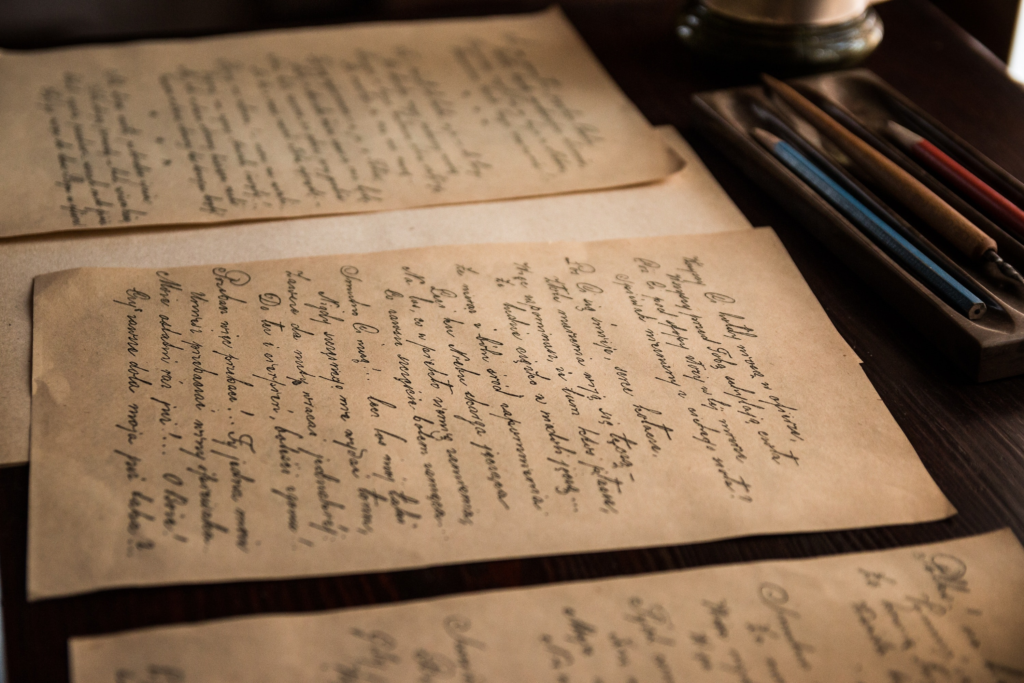
Citizen scientists play a vital role in this digitisation process, both in creating digital version and in enriching them. The first thing to do when digitising a paper source is to transcribe it. Sometimes, this is done manually by volunteers skilled in the language and handwriting used in the document, who read the paper document and type the words into a computer programme.
However, manual transcription is quite time consuming so more and more citizen science projects are starting to speed things up with transcription platforms such as Transkribus. Transkribus uses AI to create automatic transcriptions of handwritten documents, which citizen scientists can then proofread. It takes much less time for a citizen scientist to proofread an automatic transcription than it does to create a manual transcription from scratch. Because of this, Transkribus allows citizen scientists to process many more documents than would be possible manually.
What kind of citizen science projects are there?
Transkribus has been used in many different citizen science projects in digital humanities. Here are two good examples.
Europeana Transcribathon
The Europeana project is an initiative funded by the European Union. It aims to digitise items of cultural heritage from museums, archives, and libraries across Europe and create a fully-accessible online collection. Many of those artefacts are handwritten sources, which are transcribed by citizen scientists via the Transcribathon platform.
Previously, Transcribathon only allowed volunteers to transcribe documents manually. But in 2021, Europeana and Transkribus collaborated on a new version of the platform, which would generate automatic transcriptions of the documents. These could then be proofread by the citizen scientists working on the project.
You can find out more information about the collaboration in this blog post.
RetroDigitalisering
Led by the Aarhus City Archives in Denmark, the RetroDigitaliserung project focuses on the digitalisation of sources written in old Gothic handwriting, which can be very difficult to read. The project is a collaboration between many small Danish archives, that would otherwise lack the resources to organise a project of this scale alone.
RetroDigitaliserung trains citizen scientists, the majority of who are already of retirement age, to transcribe sources using Transkribus. To do this, they organise workshops around the country and create online resources, teaching the volunteers how to use the software. They have also worked with history students at the University of Aarhus. As the volunteers complete transcriptions, these are published on the project website, making them accessible to everyone.
Anette Larner of the RetroDigitaliserung project recently did a wonderful presentation about the project, which you can find on YouTube.
Swedish National Archives
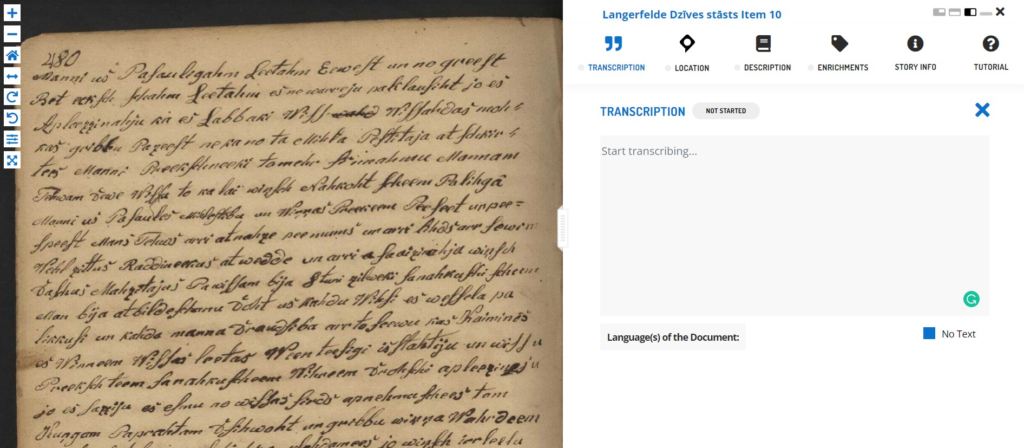
The Swedish National Archives has transcribed millions of archival documents with HTR, but until recently users had no way to fix errors. A pilot integration of its national search service (NAD) with Transkribus via IIIF is changing that. Users can now open archival files, correct transcriptions and sync their improvements back to the public portal. This turns archival users into collaborators and creates valuable ground truth data along the way.
Watch the talk from Linnéa Karlberg Lundin at TUC 2026: Bringing Community Contributions into the HTR Workflow at the Swedish National Archives
How can I set up my own citizen science project with Transkribus?
Transkribus is a great fit for citizen science projects in the digital humanities. Many people can work on the same documents or collections at the same time, which makes it easy to combine with volunteer-based methods.
Get to know Transkribus first
Before you invite volunteers, take some time to learn the platform yourself. Knowing how Transkribus works helps you set up your project efficiently and support volunteers when they get stuck. If you’re new to Transkribus, our Help Center and webinar recordings are a good place to start.
Set up your project
Upload the documents you want to work on and organise them into a collection. You can then share this collection with your volunteers. Each volunteer needs their own free Transkribus account to access it.
Let volunteers transcribe and correct
Start by running one of the public AI models on your documents. Volunteers can then correct the automatic transcriptions, which is often much faster than transcribing from scratch. For documents where no public model gives good results, volunteers can transcribe pages manually instead.
Train a model for your documents
If your material needs a model of its own, the corrected or manually transcribed pages can serve as Ground Truth. Combine them into a Dataset and use it to train a custom model tailored to your documents. This is also a great way to make volunteers’ work count twice: every page they correct improves the model for the rest of the collection. You can find out more in our guide to training models.
Prepare your volunteers
If your documents use an unfamiliar script, it helps to give volunteers a short introduction before they start, for example with a few example pages, a transcription guideline or a short onboarding session. Clear guidelines also keep transcriptions consistent across many contributors.
Citizen science and Transkribus go hand in hand. Volunteers bring time, curiosity and local knowledge. Transkribus gives them the tools to turn historical documents into searchable text, and each corrected page makes your model a little better for the next. Start small with one collection, a few volunteers and clear guidelines, and build from there.
Ready to start your own project? Try Transkribus for free
Related Articles

Ethiopic, Hebrew, Devanagari, Balinese and Ottoman Turkish: 5 public AI models for transcribing non-Latin scripts
If you scroll through the list of Transkribus’ public AI models, you might be forgiven for thinking the platform can only be used for European languages in Latin scripts, such as German, English, or…
Meet the members of READ-COOP
Did you know that Transkribus isn’t run by an ordinary company but by a cooperative? READ-COOP was set up in 2019 to ensure the long-term development of Transkribus through cooperation and…

What is Digital Humanities?
You may have heard of the academic disciplines known as the humanities, but what exactly is digital humanities? It’s not easy to define this relatively recent field and finding one definition that…