How to transcribe church records with Transkribus
For centuries, local churches and parishes have been responsible for keeping track of life’s big milestones—baptisms, marriages, and burials. Today, these records are valuable historical resources, particularly for those researching family or local history. But these kinds of records can be notoriously difficult to read, thanks to the tricky handwriting that changes every time a new clerk takes over, and the endless lists of names that are hard to guess without context. Even using conventional OCR or HTR platforms can be problematic, as they are usually not capable of reading the table format often used in church records.
Transkribus changes all that. The AI-powered platform allows you to take complex, handwritten records and create digital versions of them that can then be searched for particular names or places, or even published online to help other researchers with their work. This article gives you a complete overview of how to transcribe church records with Transkribus.
Key takeaways:
- Focus on the layout first: Train a Table Model to show Transkribus where the text is on the page.
- Test with "Super Models": Start with a powerful model like the Text Titan to see if it can read the text automatically.
- Train for perfection: If the handwriting is really tough, teach Transkribus how to read the specific script in your documents.
- Make it searchable: Once finished, you can find any name or place in seconds.
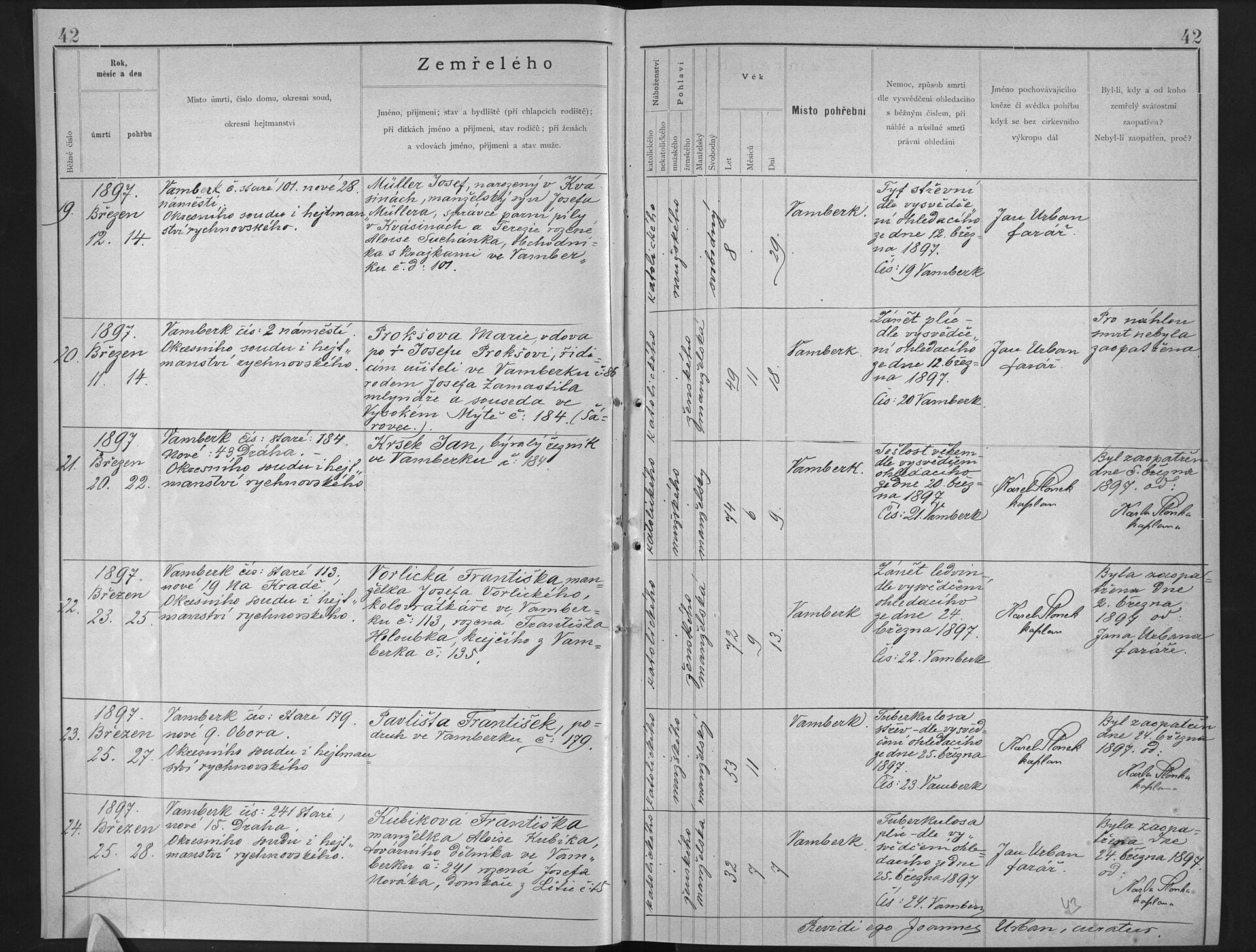
For church records with tabular layouts, showing Transkribus where the columns and rows are is the first step to accurate transcriptions.
Start with the layout
Most church registers, such as birth or marriage records, are set up in tables. If you just try to transcribe the page as a flat block of text, the AI might read straight across the lines, mixing up names, dates, and locations.
To get a clean transcription, you need to show Transkribus the layout of the page using a Table Model.
- First you need to prepare training data by manually marking the rows and columns on at least 20 pages of documents.
- Transkribus will then use these documents to learn where the rows and columns are typically located on a page in your collection, and apply this knowledge to the rest of your documents.
- This ensures that when you transcribe the text contained in the table, the "Date of Birth" stays in the "Date of Birth" column.
- For a proper look at training Table Models, check out the Table Models guide on our Help Center.
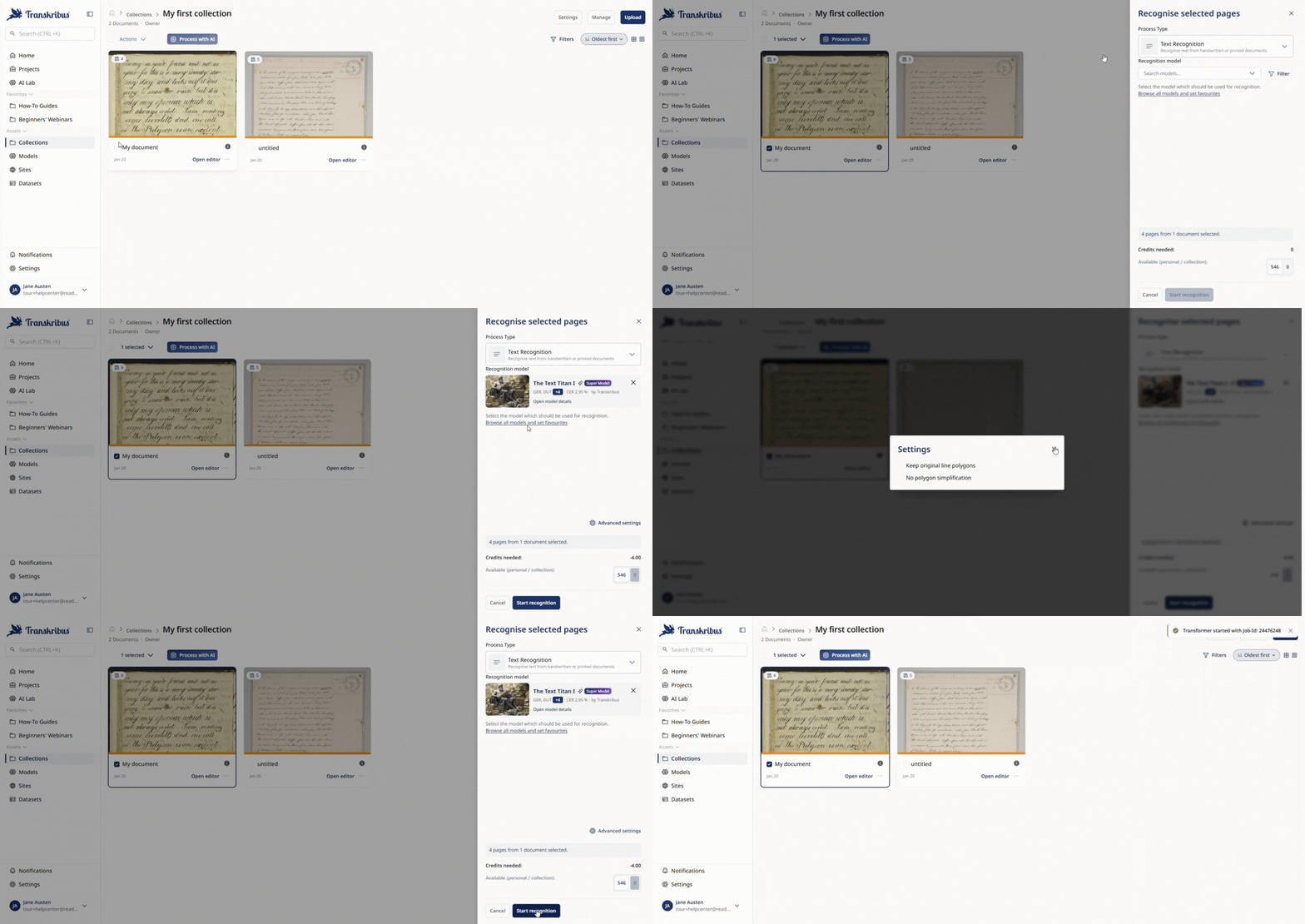 Transkribus Super Models make it possible to transcribe text at the click of a button.
Next step: transcription
Once Transkribus knows where the text is, it is time to transcribe it.
1. Try a "Super Model" first
Before you even think about training a custom model, it’s always worth trying a pre-trained Super Model such as the Text Titan first. These are powerful "all-rounder" models that have already seen millions of words of old handwriting and so are adept at transcribing a diverse range of documents.
- Pick 5–10 pages that are typical of your collection and run a few different models on them. You can find out how to do this in this guide.
- If the results are accurate enough for your needs, you're done! You can run the model on the whole collection and save yourself weeks of work.
- You can also edit the automatic transcriptions in the Editor.
2. Training a custom model
If the handwriting is particularly hard to decipher or the records are from a very specific time period that the general models struggle with, you can also train a custom model.
- Just like when training a Table Model, you'll first need to create training data. This means manually transcribing a selection of pages (usually around 50 to 100 pages, or roughly 15,000 words) until they are 100% accurate.
- It’s then time to train the model. Transkribus compares the pictures of the text to your manual transcriptions and learns how to read the handwriting.
- Once trained, a successful model will be able to transcribe the rest of that specific collection, often with incredibly high accuracy.
- You can find a full breakdown on how to train a text recognition model here.
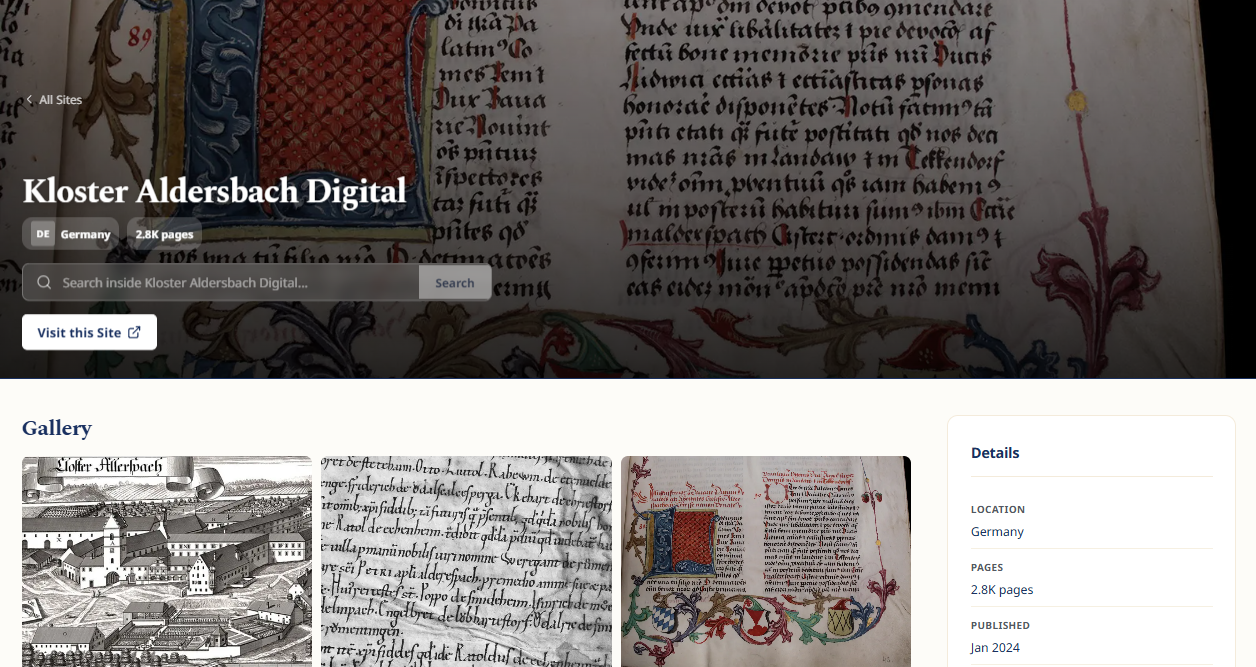
You can easily publish your transcribed documents online with Transkribus Sites.
What you can then do with your church records
Once you have a complete digital collection, there are many things you can do with it to help your research work.
- Search for specific people or places: You can search for a specific surname or a tiny village and instantly see all the pages where that entity is mentioned. Find out more about searching.
- Export and share documents: You can save your work as a PDF or an Excel-style Page XML file to share with other researchers. Find out more about exporting.
- Publish your collection online: If you want other genealogists or historians to benefit from your transcribed documents, you can publish your collection online with a Transkribus Site. Find out more about Transkribus Sites.
Bringing historical records into the modern age
Transcribing church records is often a labor of love, but it shouldn’t have to be a struggle against indecipherable scripts and complex formatting. Transkribus transforms these fragile, dusty ledgers into vibrant, searchable digital archives. Whether you are using a "Super Model" for easy transcription or training a custom model for a particularly challenging hand, you are doing more than just digitising text — you are preserving the stories of the past for future generations.
Want to unlock your church records? Create your first project in Transkribus and discover what stories your documents hold.
Related Articles
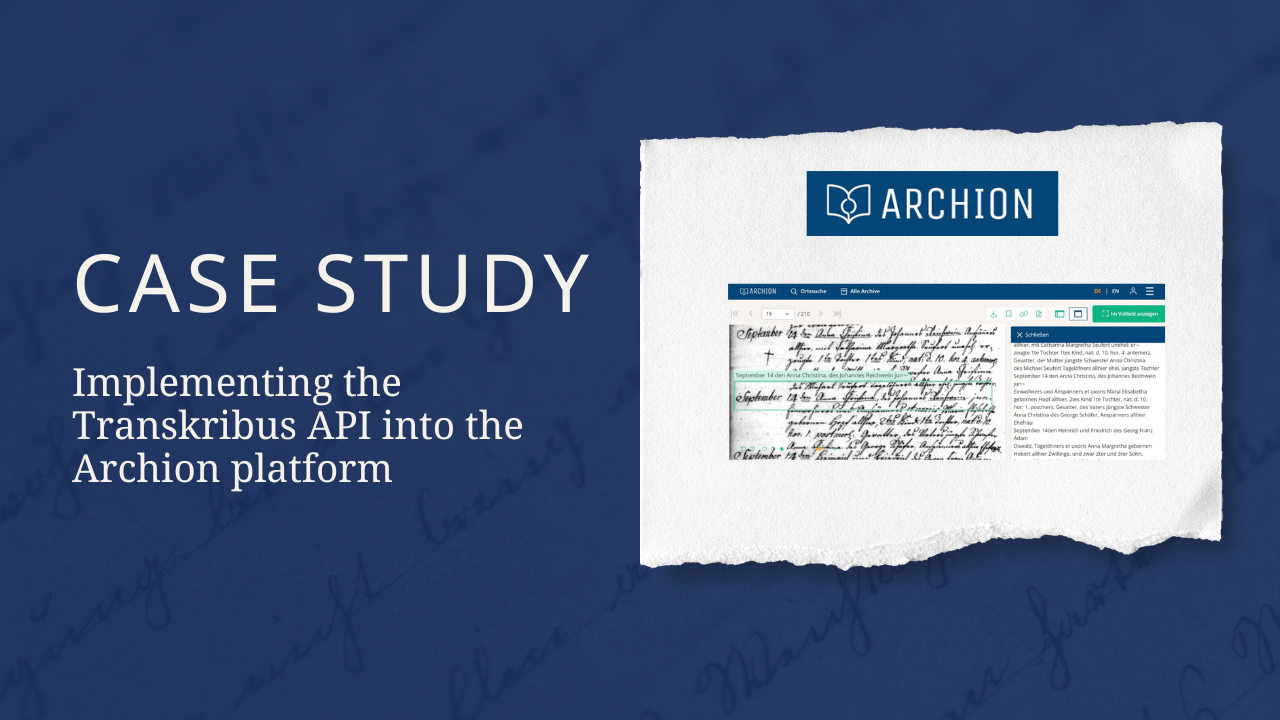
Strategic AI integration: How Archion implemented the Transkribus API
Archion is a major digital portal for family history research, providing online access to more than 200,000 church books with more than 32 million images from more than 25 German archives. These...
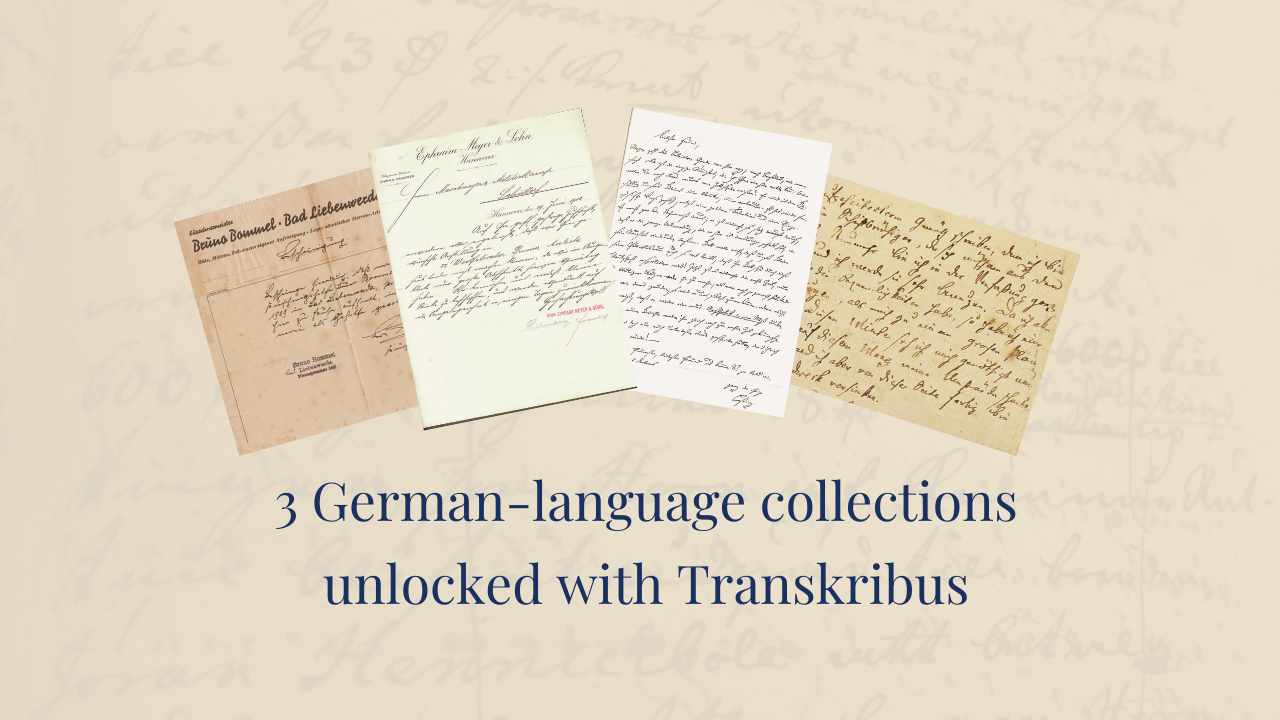
AI Made for German: Unlocking German-language archives with Transkribus
Most AI transcription tools are designed with English-language material as their default setting. They excel at modern printed text and increasingly handle contemporary handwriting, but historical...
Unlocking the secrets of the New Spain Fleets with Patricia Murrieta-Flores
Historians of colonial Latin America don’t suffer from a lack of primary sources. Across archives in Europe and the Americas lie millions of pages documenting the colonial maritime routes known as...