Description
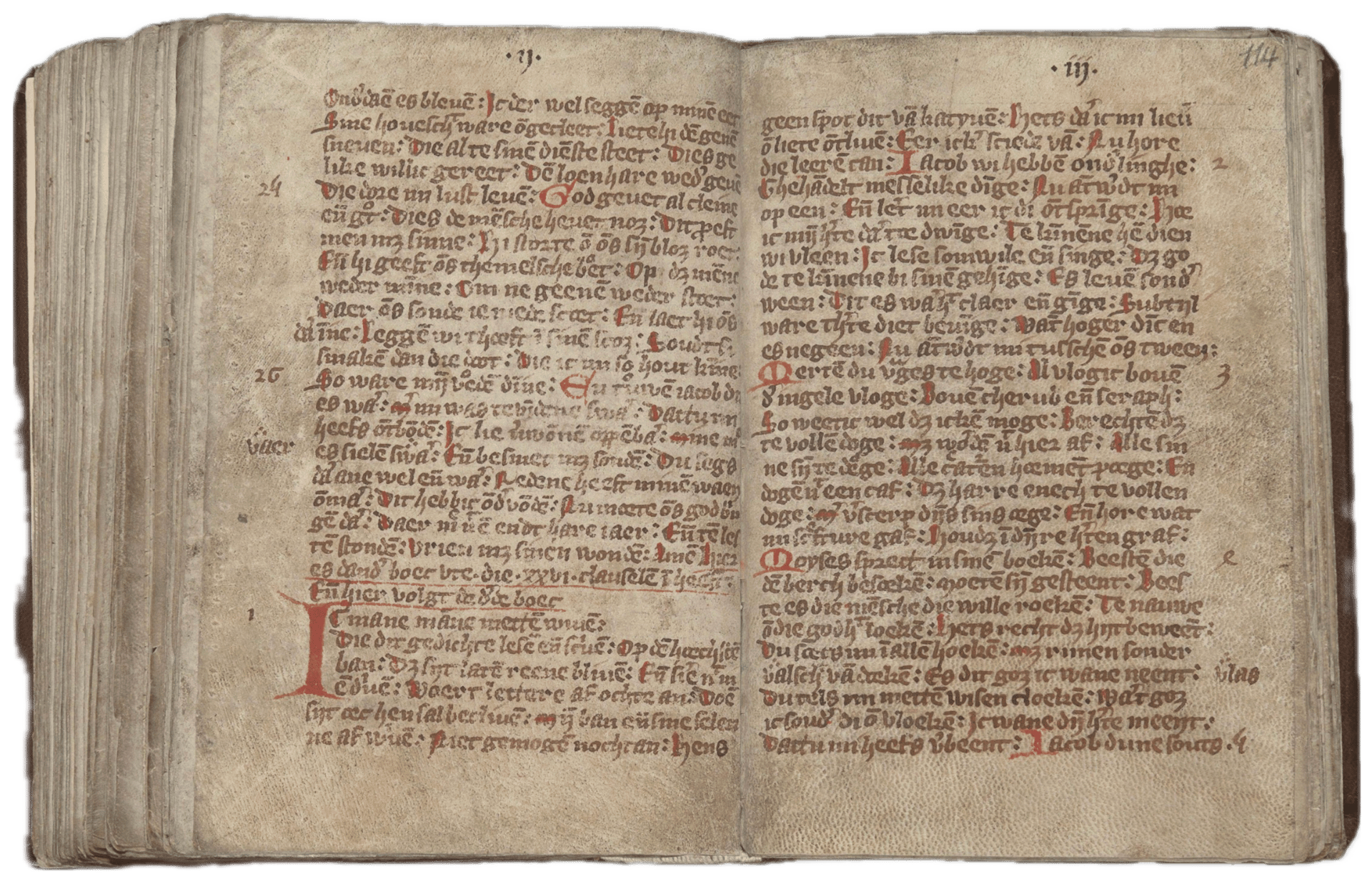
This handwritten text recognition model is trained on medieval manuscripts from the Carthusian monastery of Herne (ca. 1350-1400), specifically targeting Middle Dutch texts produced by the monastery's scribal community. The model is designed to transcribe manuscripts written by approximately 13 identified scribes who were active during this period.
The training data consists of hyper-diplomatic transcriptions that meticulously preserve original manuscript features including abbreviations, punctuation marks, marginal annotations, and exact glyph representations.
This model is particularly suited for transcribing Gothic scripts typical of 14th-century scriptoria in the Low Countries. It captures the distinctive scribal practices of the Herne community, including their characteristic abbreviation systems, orthographic preferences, and annotations that resulted from their silent scribal practices.
The model was trained on diplomatic transcriptions created by a team of researchers including Wouter Haverals, Mike Kestemont, and collaborators including Anouck Kuypers, Sam Verellen, Frans de Jonge, and Ine Kiekens. These transcriptions maintain spelling as it appears in the manuscripts and preserve all abbreviations exactly as written on the page, following 'graphemic reproduction' standards. The team manually transcribed a minimum of 10% of each manuscript (1,199 folios total) to ensure representative coverage across the entire corpus, with some transcriptions bootstrapped from existing diplomatic editions.
=================
This model was developed as part of the FWO-funded research project "Silent voices: A Digital Study of the Herne Charterhouse as a Textual Community (ca. 1350-1400)".
=================
References:
- Project website: https://hosting.uantwerpen.be/silent-voices/
- Haverals, W., & Kestemont, M. (2023). The middle Dutch manuscripts surviving from the Carthusian monastery of Herne (14th century): constructing an open dataset of digital transcriptions. Proceedings http://ceur-ws. org ISSN, 1613, 0073.
- Haverals, W., & Kestemont, M. (2020). Silent voices: a digital study of the Herne Charterhouse Scribal Community (ca. 1350-1400). Queeste, 27(2), 186-195.