Deirdre Ní Chonghaile (New York University), Oksana Dereza (University of Galway), Nicholas Wolf (New York University) · PyLaia · Published March 25, 2024
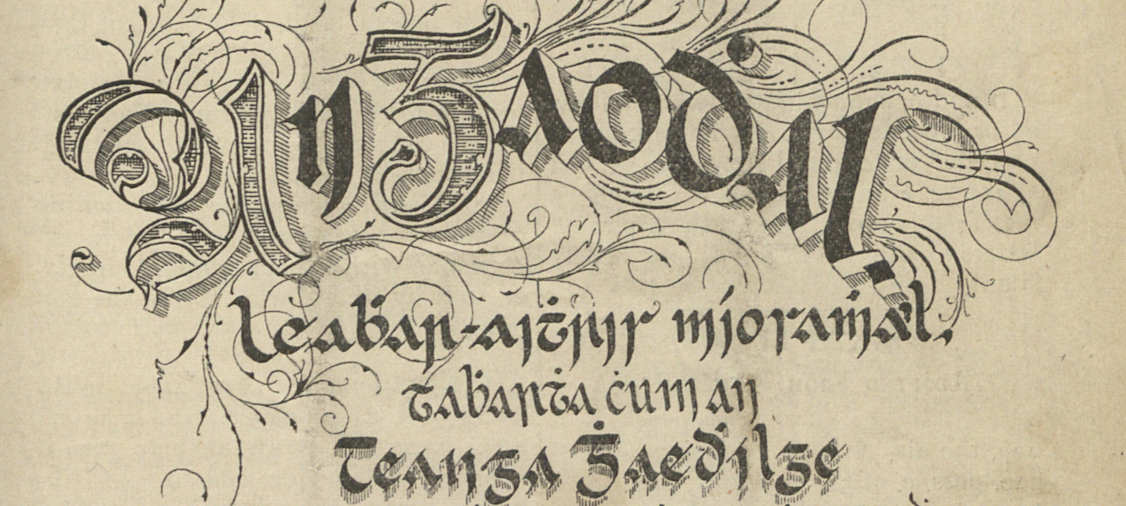
An Gaodhal Gaeilge / Irish Monolingual Model
Text Recognition
Description
This text recognition model was derived from the Irish-language pages of the late nineteenth-century newspaper An Gaodhal, a bilingual (Irish and English) publication produced in Brooklyn by Irish emigrant Micheál Ó Lócháin. It was developed in the course of the project "Building a Digitally Enhanced Edition of the Brooklyn-Published Irish-Language Newspaper An Gaodhal, 1881-1904," a collaborative initiative between New York University and the University of Galway. The Irish-language text in this newspaper is almost exclusively set in cló Gaelach, a non-Roman script commonly used at the time. All pages used for the model were corrected by a specialist in the historical forms of the language, and the digital images were provided through the digital library holdings of the James Hardiman Library at the University of Galway. The model preserves key features of the cló Gaelach form: notably, it deploys unicode characters that preserve the punctum used to designate lenition of consonants present in the original text. The project was conducted with funding support from the Robert D. L. Gardiner Foundation, the Irish Institute of New York, Glucksman Ireland House, and the University of Galway. A full set of OCR outputs from this model and further project information can be found at https://doi.org/10.58153/5ya5n-mc504.
Try this model
Drag an image here
Select a file...PNG or JPG up to 10 Mb
Wolpi
AI Assistant
By uploading an image, you accept our terms and privacy policy.
Use this modelOpen in Transkribus
Very low error rate1.4% CER
Character Error Rate (CER) measures the percentage of characters incorrectly recognised. Lower is better. This model scored 1.4% on its validation set. As a rule of thumb, a CER below 10% is considered good for most handwritten material.
Measured on the model's own validation data. Results on your documents may differ depending on handwriting style, document condition, language, and how closely your material resembles the training data.
Words164,015
Lines25,192
Training Pages344
Model ID61350