
About this Project
Saminiati-Pazzi Archive
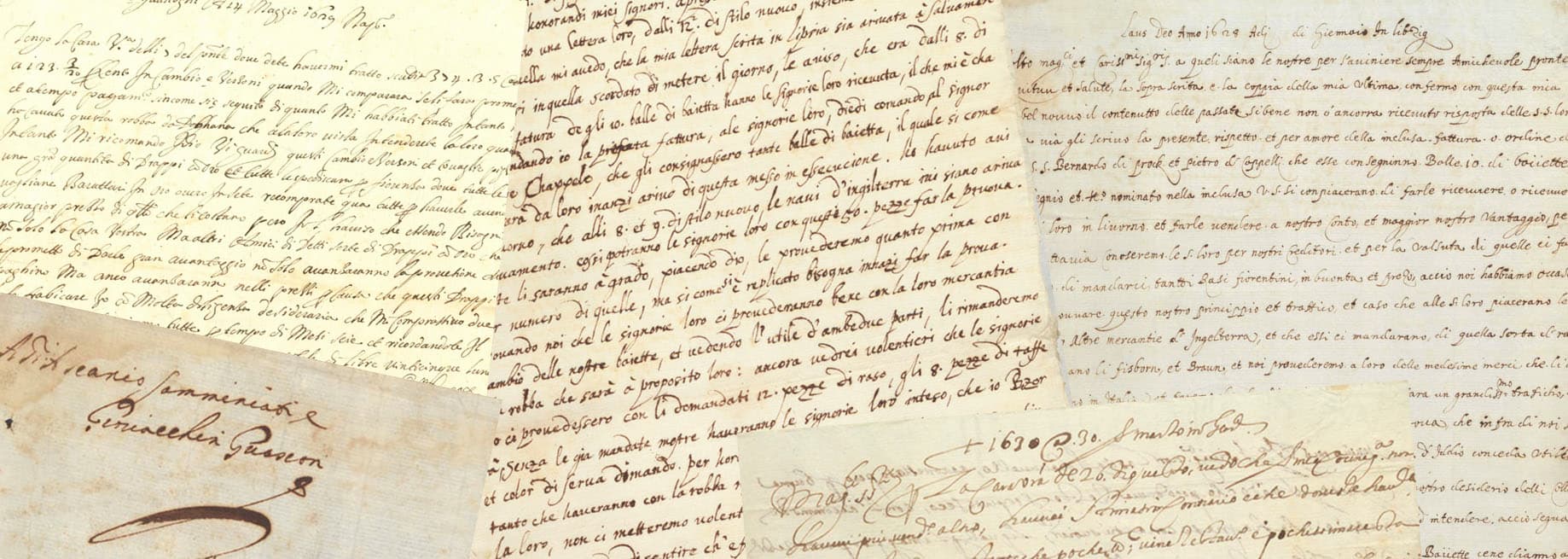
The papers in the archive concern the business activities of the Saminiati family from the 15th to the 18th century and of the Pazzi family – who received the other family’s assets at the time of their passing – from the 16th to the 19th century. In addition to documents attributable to individual members of the two families, there are financial documents – including income and expense registers, cash logs, newspapers, debtors and creditors, exchange rates and exchange fairs, and balance sheets – that attest to the business activity of the "Compagnie di mercatura", the commercial and banking companies in which the Saminiatis took an active part throughout the 17th century and documents relating to the estates that belonged to the two families. The correspondence is also both private and related to the commercial activities and rural properties of both the Saminiati and Pazzi families.
Saminiati and Bocconi
The bond linking Bocconi University and the Saminiati-Pazzi Archive is strong, as it was a Bocconi professor of economic history, Armando Sapori – later Rector of the University – who saved this archive. Another alumnus, Sergio Groppi, meticulously worked to reorganize and inventory the collection. The papers, already destined for pulping and in a critical condition, were purchased by the University on 10 June 1941 and transferred from Florence to Milan. The work of reorganization began around 1943 at the then Institute of Economic History (ISE) by Professor Aldo De Maddalena, who began as a student and then continued his activity as an assistant to Professor Sapori. A first report on the archive was already available in 1946. Later, in April 1953, the Rector Armando Sapori learned that another part of the Archive had been sold to the Horne Foundation of Florence and, having obtained the financial support of the Banca Nazionale del Lavoro, proceeded to purchase the material which was brought to Milan on 27 May 1953. In 1958 the reorganization work was resumed systematically by Groppi, who in 1946 had discussed with Professor Sapori his Bocconi degree thesis on the Saminiati-Pazzi collection. The transport of the material to the Convent in Piacenza, where Groppi lived, was indispensable for their study and analysis.
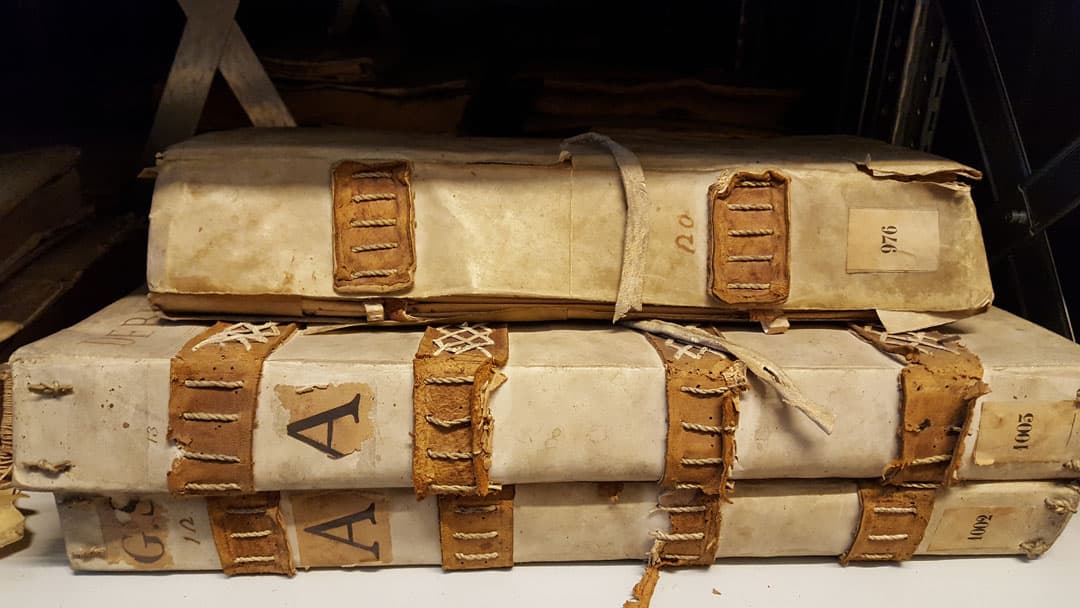
The Saminiati-Pazzi Archive was declared of considerable historical interest on 16 June 1997. Since April 2014 it has been kept in the new storage room of the historical collections at the Bocconi University Library and Archives.
Mercantile Correspondence
Mercantile correspondence is certainly the most significant section of the Saminiati-Pazzi Archive. The letters have been collected in 833 boxes, and the most significant part is dedicated to the “Compagnie di mercatura” from the 17th century (733 boxes), while the others are on the private subjects of the Saminiatis (56 boxes) and the Pazzis (13 boxes) as well as on estate relations (32 boxes). The Saminiati companies were proper commercial and banking companies, of which one may study in depth through the documents and registers, as Sergio Groppi points out in the introduction to the inventory published in 1990.
The correspondence of the Companies is as follows:
· Luca Tornaquinci and Comp., Florence, 1624-1626: nos. 18–20, 3 boxes;
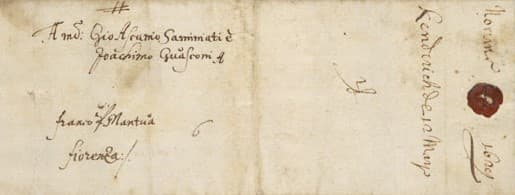
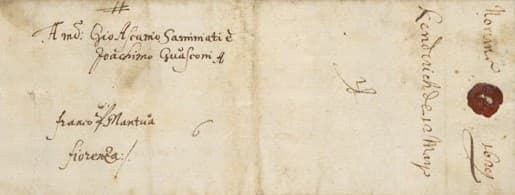
· Ascanio Saminiati, Giovacchino Guasconi e Comp., Florence, 1626-1641: nos. 21–130, 110 boxes;
· Ascanio Saminiati, Nicolò Guasconi e Comp., Florence, 1641-1669: nos. 131–269, 139 boxes;
· Giovan Francesco Saminiati, Bonaventura Ambrogi e Comp., Livorno, 1653-1662: nos. 271–337, 67 boxes;
· Giovan Francesco Saminiati and Comp., Livorno, 1662-1670: nos. 338–380, 42 boxes;
· Giovan Francesco Saminiati, Guido Maria Strozzi e Comp., Livorno, 1670-1673: nos. 381–424, 44 boxes;
· Francesco and Giovan Francesco Saminiati, Guido Maria Strozzi e Comp., Livorno, 1673-1678: nos. 424–470, 46 boxes;
· Ascanio Saminiati and Comp., Venice, 1669-1684: nos. 471–570, 100 boxes;
· Ascanio Saminiati and Comp., Florence, 1669-1684: nos. 571–690, 120 boxes;
· Baccio by Ascanio Saminiati, Florence: nos. 691–750, 60 boxes.
The collection’s peculiarity consists in the availability – in addition to incoming letters – of outgoing letter copies, as well as registers and accounting documentation.
Material selected for the project
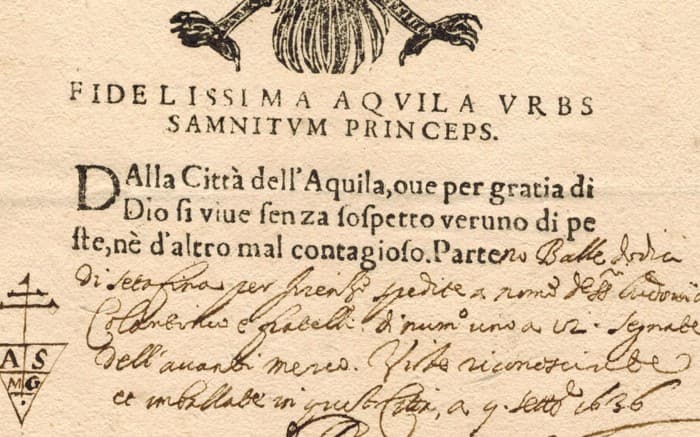
In 2024, as part of a research project on the economic impact of the plague of 1630, the transcription project was launched, starting with an initial collection of letters sent to the Saminiati family by merchants from various cities: Rome, Naples, Genoa, Messina, Leipzig, Nuremberg and Turin. In addition to the original letters received by the merchants, a selection of papers from register 192 was also included, containing copies of letters sent by the Florence banking company of Ascanio Saminiati and Giovacchino Guasconi (1626-1628, 205 ff.).
In 2025, other files from the Florentine trading company Ascanio Saminiati, Giovacchino Guasconi (1626-1641) were added.
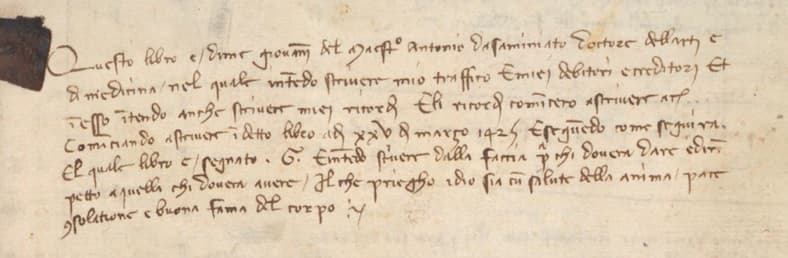
A second collection dedicated to the Register Chellini (Libro delle Ricordanze di Maestro Giovanni del Maestro Antonio di Iacopo da San Miniato), 15th century, has also been added to the mercantile correspondence. This is the oldest register in the Saminiati Pazzi collection and covers the years from 1425 to 1498.
The transcription of the documents presented on this website was prepared by Dr. Maria Teresa Sillano (*).
(*) Sillano, Maria Teresa (1984). Le ricordanze di Giovanni Chellini da San Miniato. Milano, Franco Angeli
The register Chellini
Giovanni Chellini, a Florentine physician and humanist of the fifteenth century, is considered the main representative of the Saminiati family. Although not its founder, he contributed decisively to its prestige thanks to his academic career, relations with the Florentine elite, and charitable works, such as the founding of a chapel at San Miniato and bequests to religious institutions—works that consolidated his name and memory in the city.
Giovanni Chellini's Libro delle Ricordanze is a valuable testimony of Florentine life between the late fourteenth and fifteenth centuries. Through family, economic, and civic annotations, the doctor records everyday and extraordinary events, such as the earthquake that struck Florence on September 28, 1453 (cf. fol. 174). Among the pages also emerges the relationship with Donatello, his patient and friend, who gifted Chellini a bronze tondo depicting “The Virgin with the Child on her lap and two angels” (cf. fol. 199), a work now displayed at the Victoria & Albert Museum in London. The manuscript, restored in 2024, thus provides a vivid snapshot of Renaissance society, where science, art, and civic life intertwine in both personal and collective memory.
Contacts
HEADQUARTERS:
Bocconi University. Library and ArchivesVia Ulisse Gobbi, 5 – 20136 Milan
PHONE: +39 0258365147
FOR FURTHER INFORMATION:
archivistorici@unibocconi.itINSTITUTIONAL WEBSITE:
https://asboc.unibocconi.it
Gallery

Explore Other Sites
 Italy
ItalyI Taccuini di Paolo Orsi
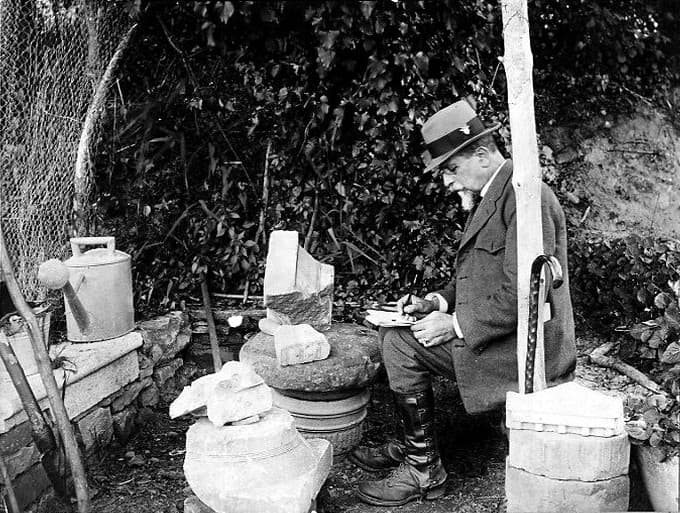
The digital edition of the first 16 notebooks of Paolo Orsi
Published Oct 2023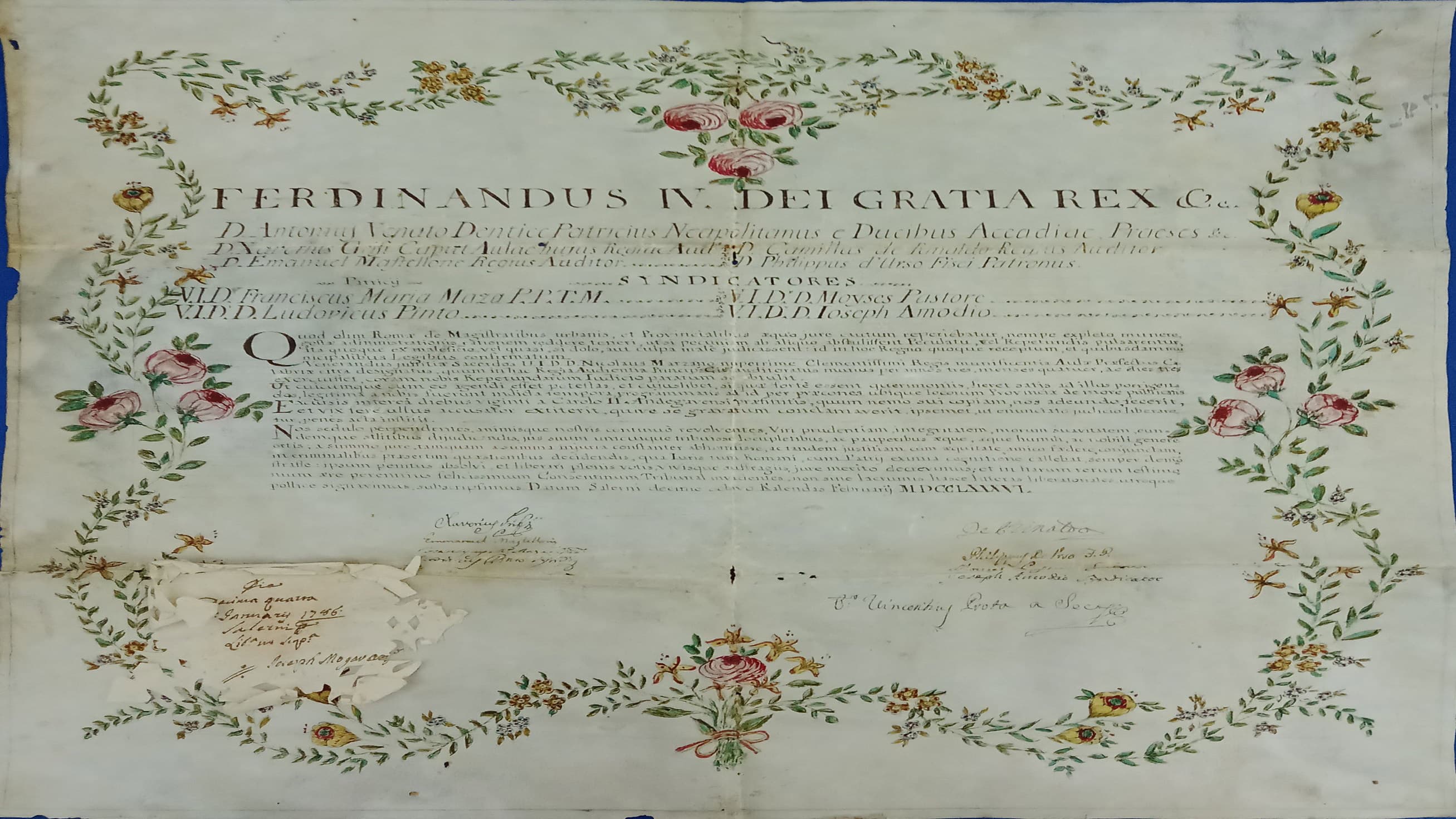
 Italy
ItalyArchivio di Stato di Vibo Valentia - Atti Notarili
Questo progetto mira a rendere consultabile online una selezione di atti del fondo notarile dell'Archivio di Stato di Vibo Valentia. Sono state rese disponib...
Published Sep 2024
 Italy
ItalyARCANO
Università degli Studi L'Orientale - Fondazione Banco di Napoli
Published Oct 2025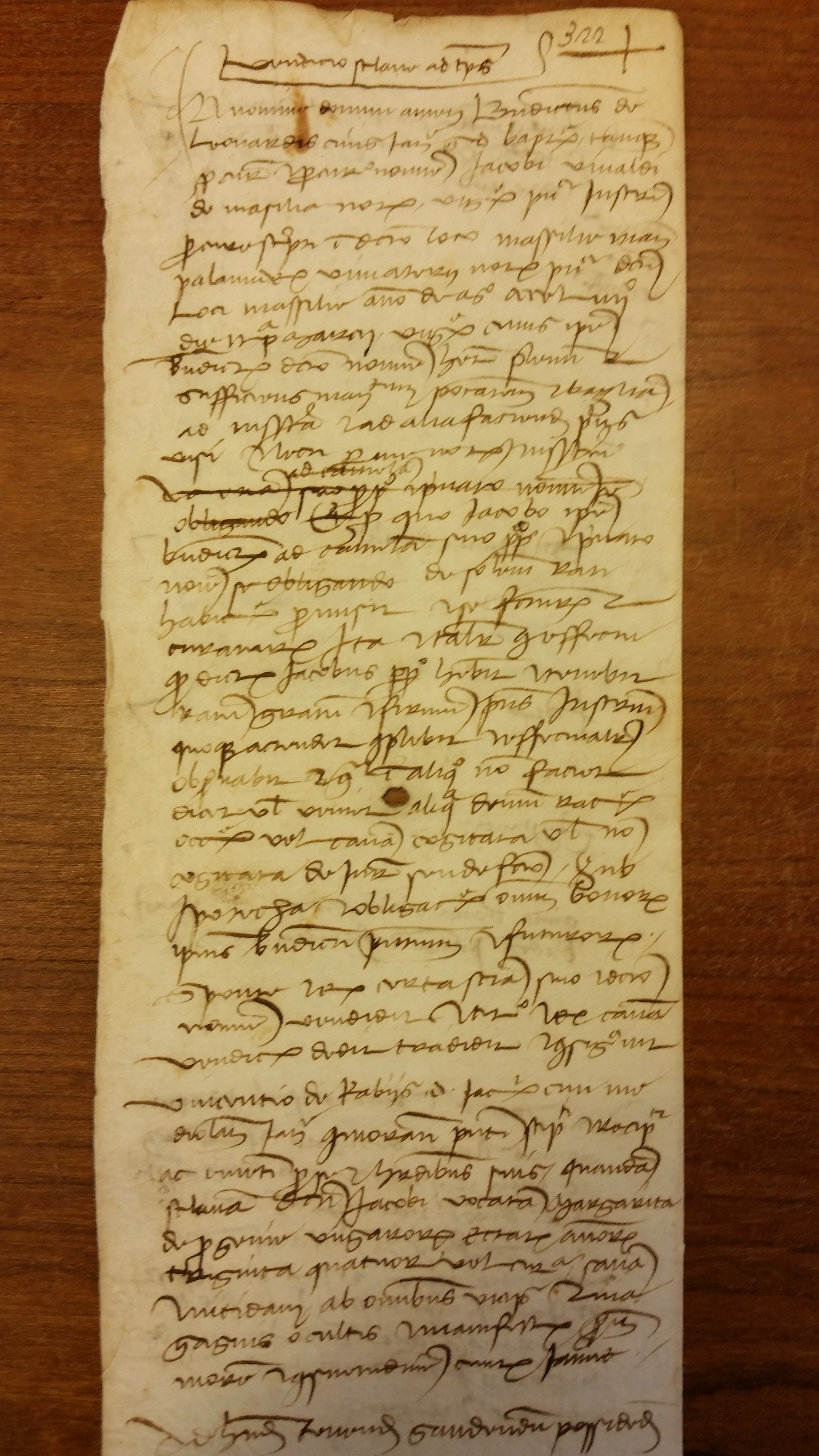 Italy
ItalyGenoese notarial contracts 1300–1550
Archivio di stato di Genova
This is a project to transcribe and train Transkribus to recognize Genoese notarial contracts enacted from 1300 to 1550.
Published Aug 2023