Skip to content
  • Pricing

Transcribe Immigration Records and Ship Passenger Lists with AI

Turn handwritten ship manifests and passenger lists into searchable text in minutes. From Ellis Island to European port records, across 100+ languages.

Ship ManifestsEllis IslandImmigration RecordsFree to Try

Drag an image here

Select a file...

PNG or JPG up to 10 Mb

Wolpi
AI Assistant

By uploading an image, you accept our terms and privacy policy.

Trusted by 500,000+ users worldwide — 200M+ pages processed

500K+
Users worldwide
200M+
Pages processed
300+
Public AI models
100+
Languages and scripts

The problem

Why immigration manifest OCR fails on ship passenger lists
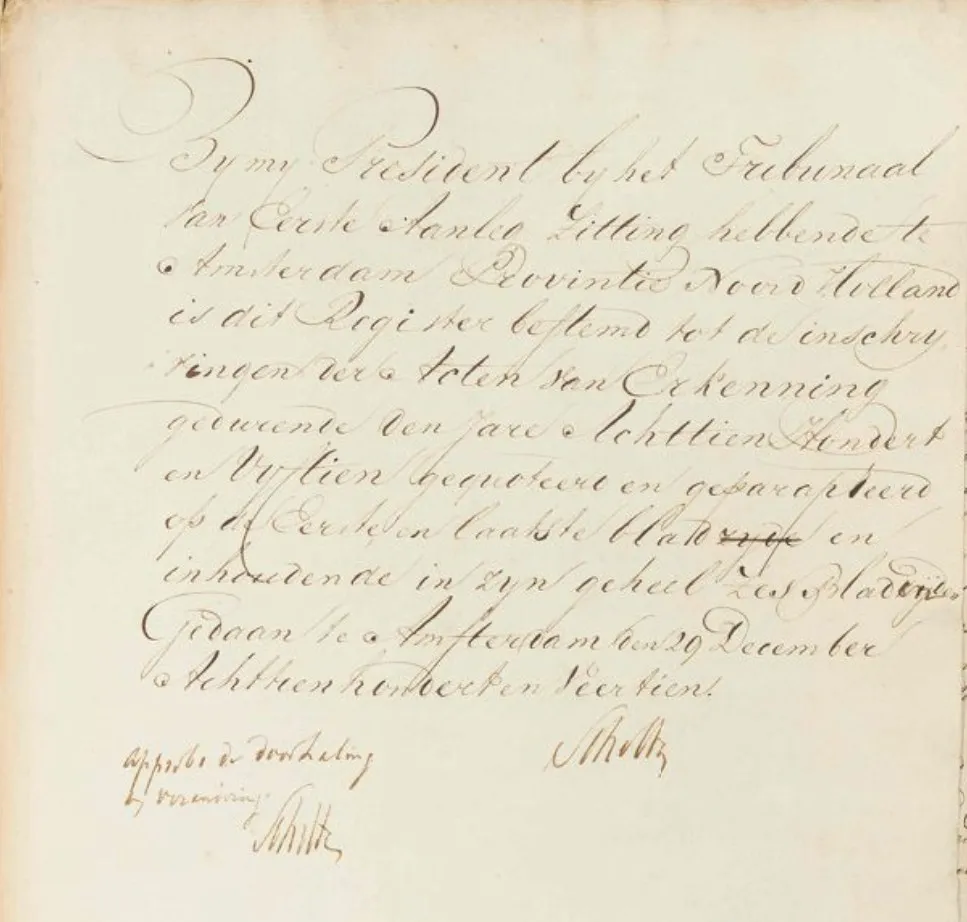
Immigration records are among the most challenging documents in genealogy. Ship manifests were filled out by port inspectors and ship clerks writing under pressure, often recording names from dozens of languages they didn't speak. A single Ellis Island manifest page might contain Irish, Italian, Polish, Yiddish, and German names — each phonetically approximated by an English-speaking clerk. Earlier records from Castle Garden (1820-1892) are even harder: cramped columns, faded ink, and minimal standardisation. Standard OCR tools fail because they can't handle the mix of languages, the dense tabular layout, and the heavily abbreviated entries.
Multi-language names on every page — clerks wrote what they heard, not what was spelled
Dense tabular layouts with 20+ columns on a single manifest sheet
Heavy abbreviation: 'do.' for ditto, country codes, occupation shorthand, tick marks
Faded ink, pencil annotations, stamps, and microfilm artefacts obscure entries
Names transliterated from Cyrillic, Hebrew, Arabic, and other scripts into Latin letters
Historical Dutch administrative record with official registration handwriting

The solution

AI that reads Ellis Island record handwriting and passenger arrival records
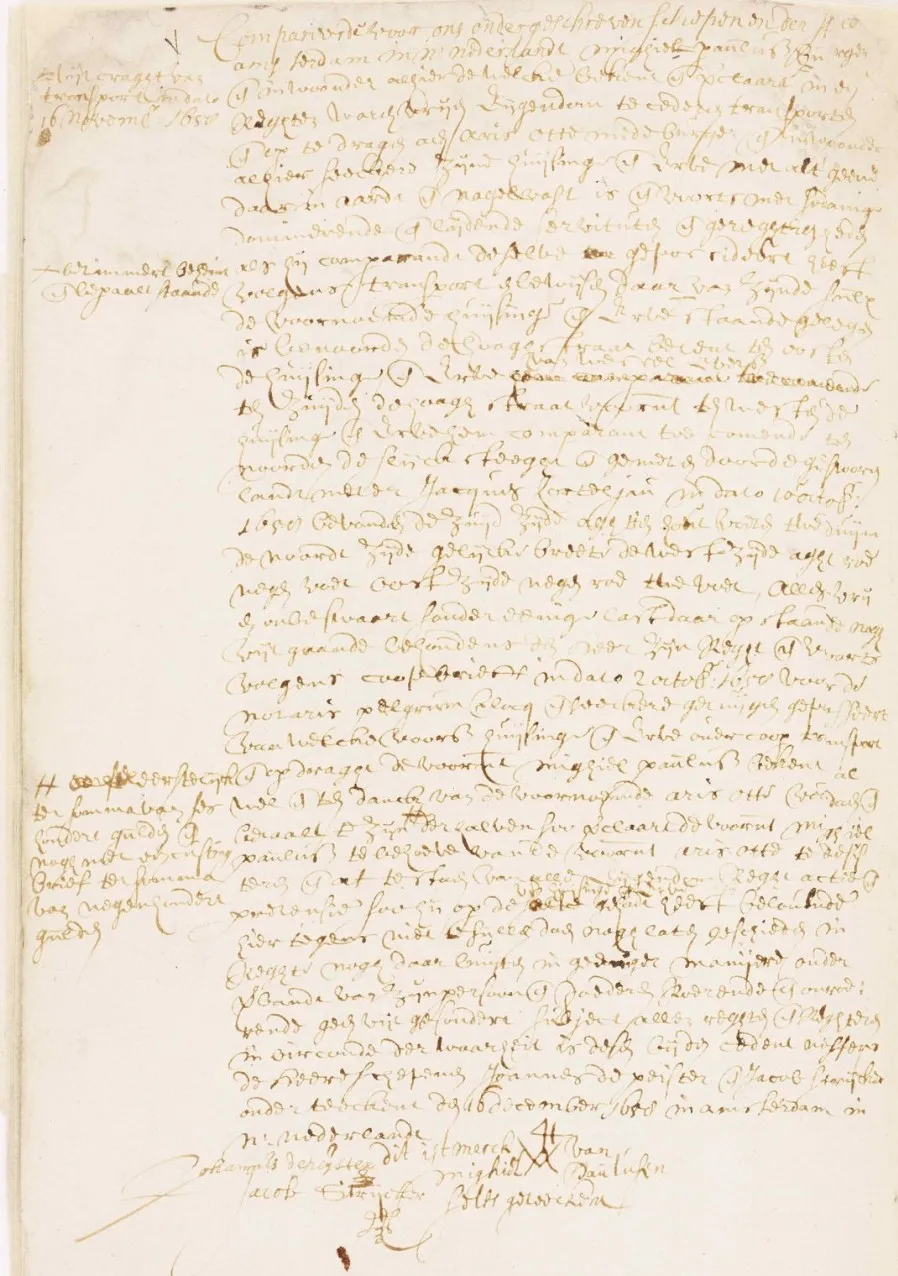
Transkribus uses handwritten text recognition (HTR) trained on millions of historical handwriting samples — including immigration-era documents. Unlike standard OCR, it understands connected cursive, dense tabular layouts, and the abbreviation conventions used on ship manifests and naturalization forms. The AI handles 100+ languages and scripts, making it uniquely suited for the multilingual reality of immigration records. Upload a scan or photo, select a model, and get structured, searchable text back in minutes.
300+ public models — including models for 19th and 20th-century handwriting styles used on manifests
100+ languages and scripts — reads names originally written in Latin, Cyrillic, Hebrew, and more
Table detection identifies manifest columns: name, age, occupation, nationality, last residence, destination
Confidence scores on every entry — see exactly which names and fields need your review
Export as plain text, CSV, Excel, searchable PDF, or structured XML
17th-century Dutch notarial deed — typical of port and shipping records

How to transcribe immigration records in 4 steps

Upload your document

Take a photo with your phone or upload a scan. Transkribus accepts JPG, PNG, PDF, and TIFF — including multi-page manifests and naturalization packets.

Select an AI model

Choose from 300+ public models. Filter by language, century, and script type to find the best match for your immigration record's era and origin.

Run text recognition

Click 'Recognise' and let the AI work. It detects the manifest's table structure, reads each cell, and processes the full page in about 30 seconds.

Review and export

Check the transcription against the original image. Fix any misread names in the built-in editor, then export as text, CSV, Excel, PDF, or XML.

See table recognition in action

Ship manifests and passenger lists are tabular records. Transkribus detects columns and rows automatically, extracting each entry into structured data for your genealogy database.
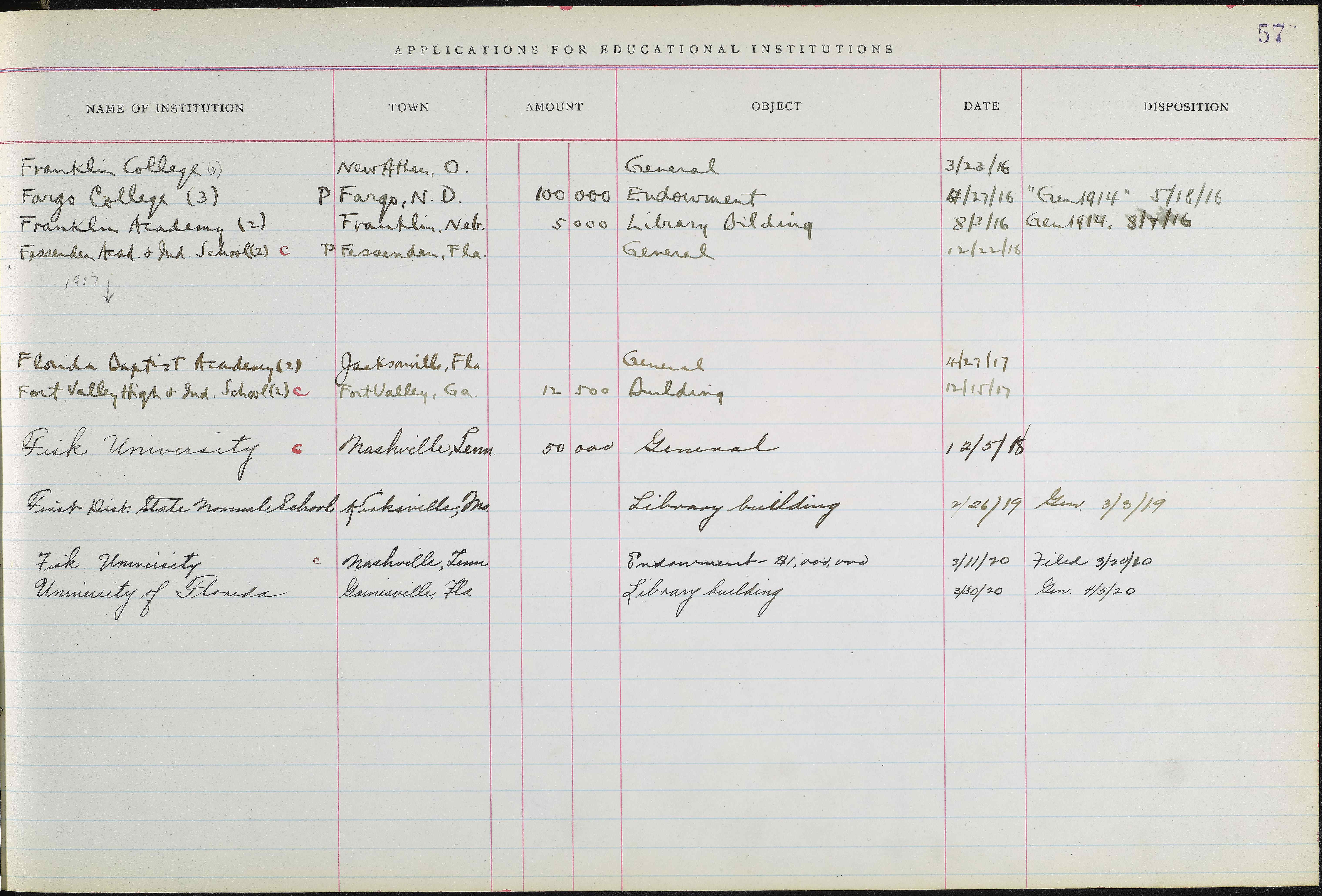
Document with detected table structure
Extracted Data
InstitutionTownAmountObjectDateDisposition
Franklin College (6)New Athen, O.General3/23/16
Fargo College (3)Fargo, N.D.100,000Endowment4/27/16Gen 1914, 5/18/16
Franklin Academy (2)Franklin, Neb.5,000Library Building8/3/16Gen 1914, 8/7/16
Fessenden Acad. & Ind. SchoolFessenden, Fla.General12/22/16
Florida Baptist Academy (2)Jacksonville, Fla.General4/27/17
Fort Valley High & Ind. SchoolFort Valley, Ga.12,500Building12/15/17
Fisk UniversityNashville, Tenn.50,000General12/5/18
First Dist. State Normal SchoolKirksville, Mo.Library Building2/26/19Gen. 3/3/19

Models for immigration records

AI models for ship passenger list transcription and naturalization records
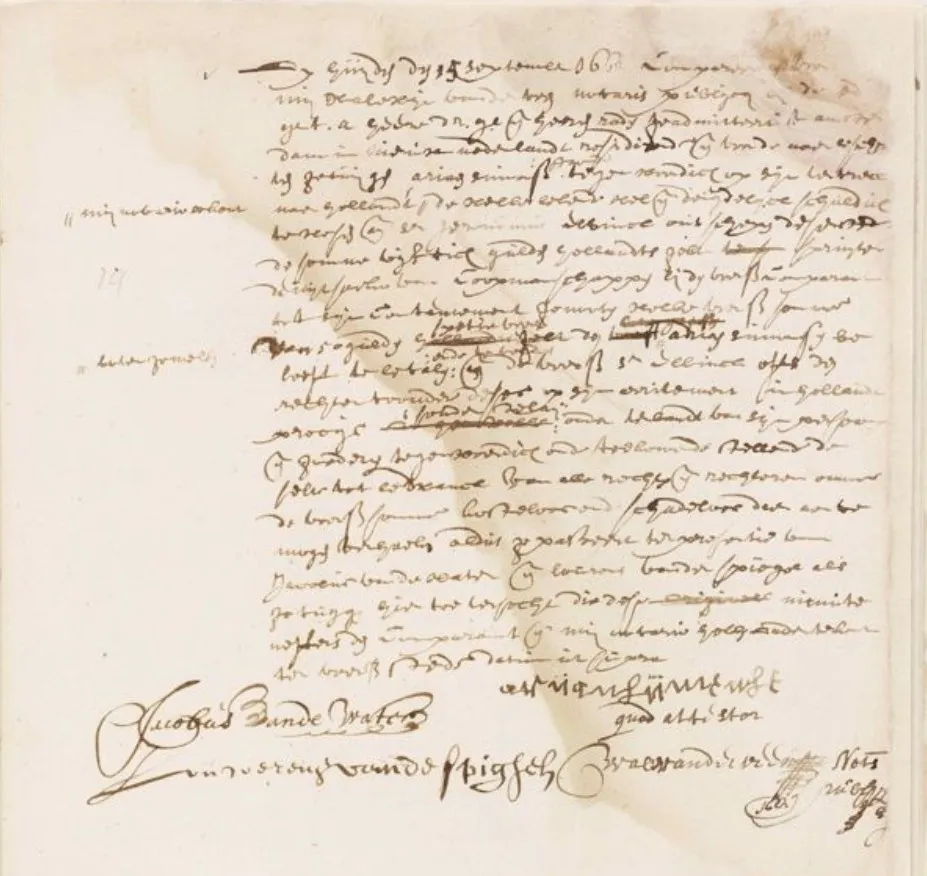
The Transkribus public model catalog includes models suited to the handwriting styles found on immigration documents from major ports and eras. These models understand the dense columnar layouts, standardised forms, and multilingual entries that make immigration records unique among genealogical sources.
US port records: models for Ellis Island-era manifest handwriting (1892-1954) and earlier Castle Garden records
UK and European port records: models for Liverpool, Hamburg, Bremen, and Le Havre passenger lists
Naturalization papers: models for handwritten petitions, declarations of intention, and certificates
Multi-language support: 100+ languages, critical for records mixing English, German, Italian, Polish, Yiddish, and more
New models added by the community regularly — covering more ports, eras, and document types
Dutch notarial document from the colonial era

Frequently Asked Questions

Accuracy depends on the document's condition, handwriting clarity, and the model used. On well-preserved manifests with legible handwriting, our best models achieve 95%+ character accuracy. Faded entries, stamps, or unusual clerk handwriting may need a custom-trained model. Every line includes a confidence score so you know which names and fields to double-check.
Yes. Transkribus supports 100+ languages and scripts. Immigration records frequently contain names from multiple languages on a single page — Irish, Italian, German, Polish, Yiddish, and more. The AI handles Latin-script names from all these languages, and specialised models exist for documents containing Cyrillic, Hebrew, and other scripts.
Yes. Naturalization papers — including declarations of intention, petitions for citizenship, and certificates — are handwritten forms that Transkribus can read. These documents often contain the immigrant's original name, birthplace, port of arrival, and date of entry, making them invaluable for genealogy research.
Transkribus works on immigration records from any port or country, provided there is a suitable model for the handwriting style. The public model catalog includes models trained on records from US ports (Ellis Island, Castle Garden), UK ports (Liverpool), and major European departure ports (Hamburg, Bremen, Le Havre). You can also train a custom model on records from any port.
Ship manifests are full of abbreviations — 'do.' for ditto, occupation codes, nationality shorthand, and tick marks. Transkribus reads these as they appear in the original document, preserving the abbreviations in the transcription. This gives you an accurate record of what was written, which you can then interpret in context.
Yes. Transkribus is designed for bulk processing. Upload hundreds or thousands of manifest pages, select a model, and let the AI process everything in batch. This is especially useful for genealogists working through entire ship manifests or archivists digitizing complete port record collections.
Transkribus gives you 50 free credits every month — enough to transcribe about 50 pages. No credit card required. If you need more for larger collections, paid plans start at affordable rates. See our plans and pricing page for details.
Yes. Transkribus accepts smartphone photos as well as high-resolution scans and microfilm images. For best results when photographing manifest pages, use good lighting, keep the document flat, and fill as much of the frame as possible. JPG, PNG, PDF, and TIFF formats are all supported.
EUAT

Your documents, your data, your control.

Transkribus is built and hosted in Europe by a cooperative of 250+ institutions. Your data stays yours.

Full data ownership

Your documents and transcriptions belong to you. Delete anytime.

Hosted in Europe

All processing on our own servers in Austria. GDPR-compliant. No Big Tech dependencies.

Built for the long term

A cooperative, not a startup. 250+ co-owners ensure Transkribus will be here for years to come.

Related guides

Explore more genealogy record types

Immigration records are just one piece of the puzzle. Explore our other record-type guides: Church records · Census records · Vital records · Military records · Wills & probate · Land deeds
Various genealogical record types

Ready to unlock your immigration records?

Create a free account and start transcribing ship manifests and passenger lists today. 50 free credits every month — no credit card required.

50 free credits every month — No credit card required

200M+Pages processed
500K+Users worldwide
300+Public AI models