The problem
Why Standard OCR Fails on Handwriting
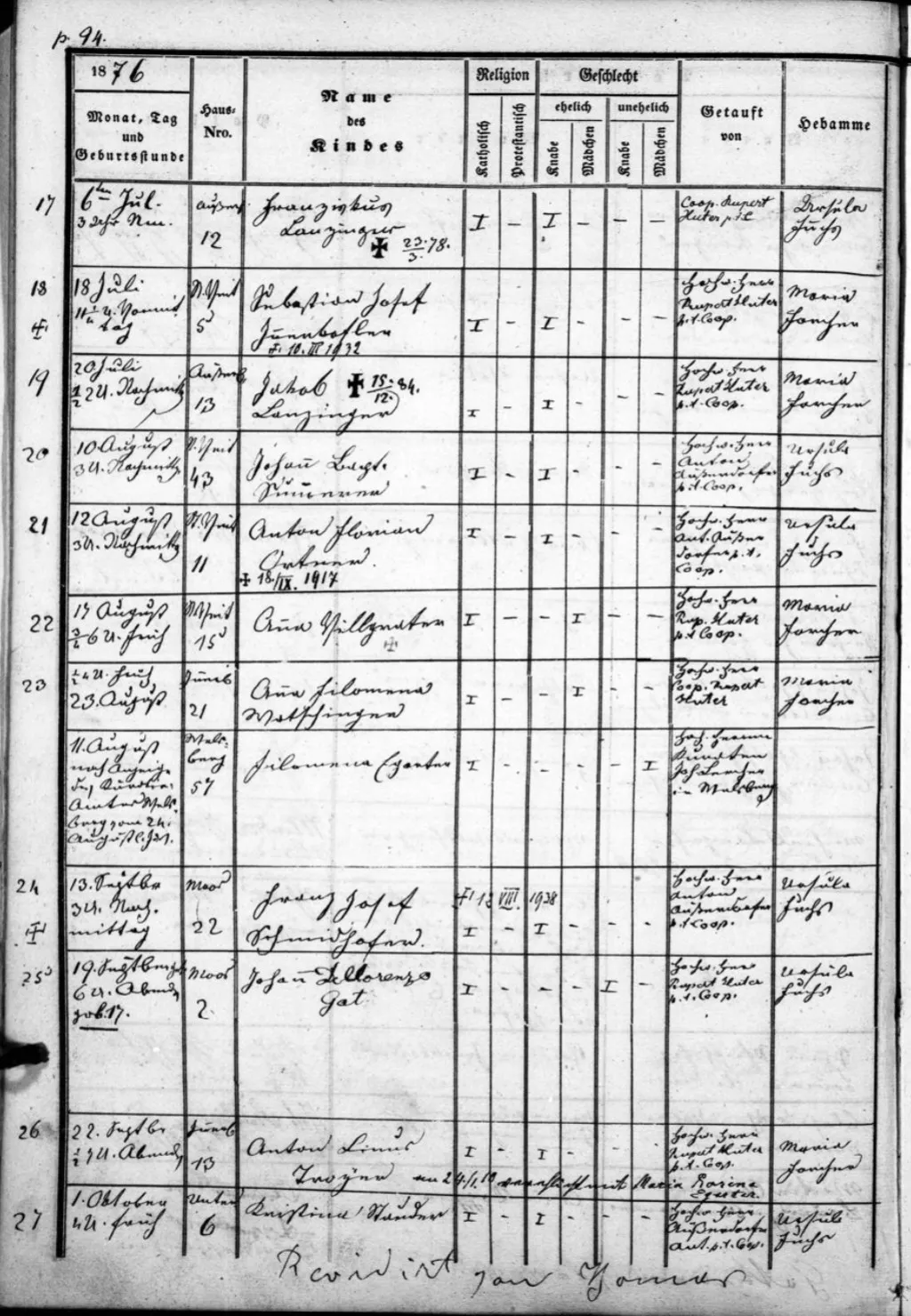
Optical Character Recognition (OCR) was designed for printed text — uniform typefaces with consistent letter spacing and predictable layouts. When applied to handwritten documents, standard OCR produces unusable results. Handwriting is inherently variable: letterforms differ between writers, characters connect in unpredictable ways, and historical scripts like Kurrent, Sütterlin, or Secretary Hand bear little resemblance to modern print. This is the core problem that Handwritten Text Recognition technology was developed to solve.
Standard OCR engines expect uniform character shapes — handwriting varies between every writer and even within a single page
Connected and cursive scripts cannot be segmented into individual characters the way printed text can
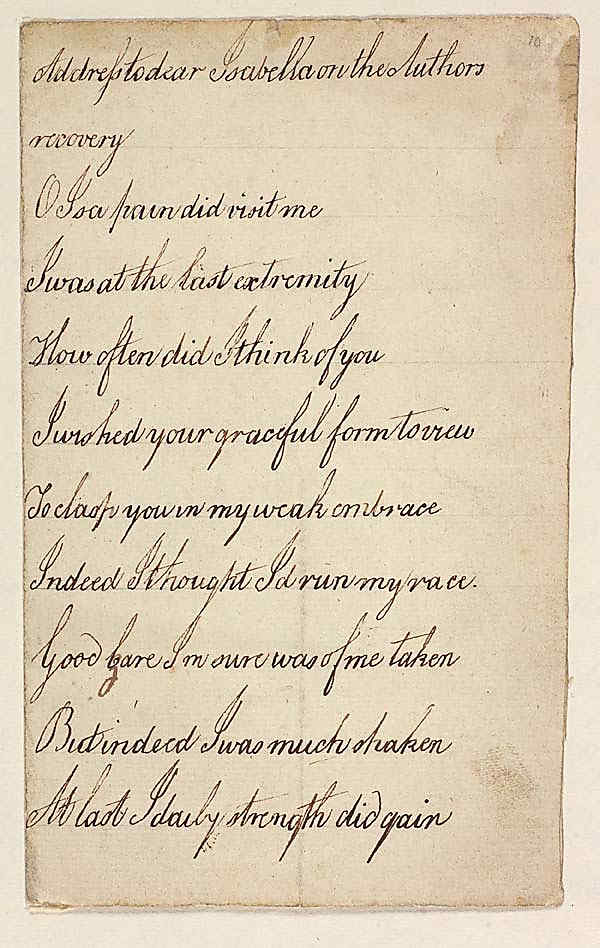
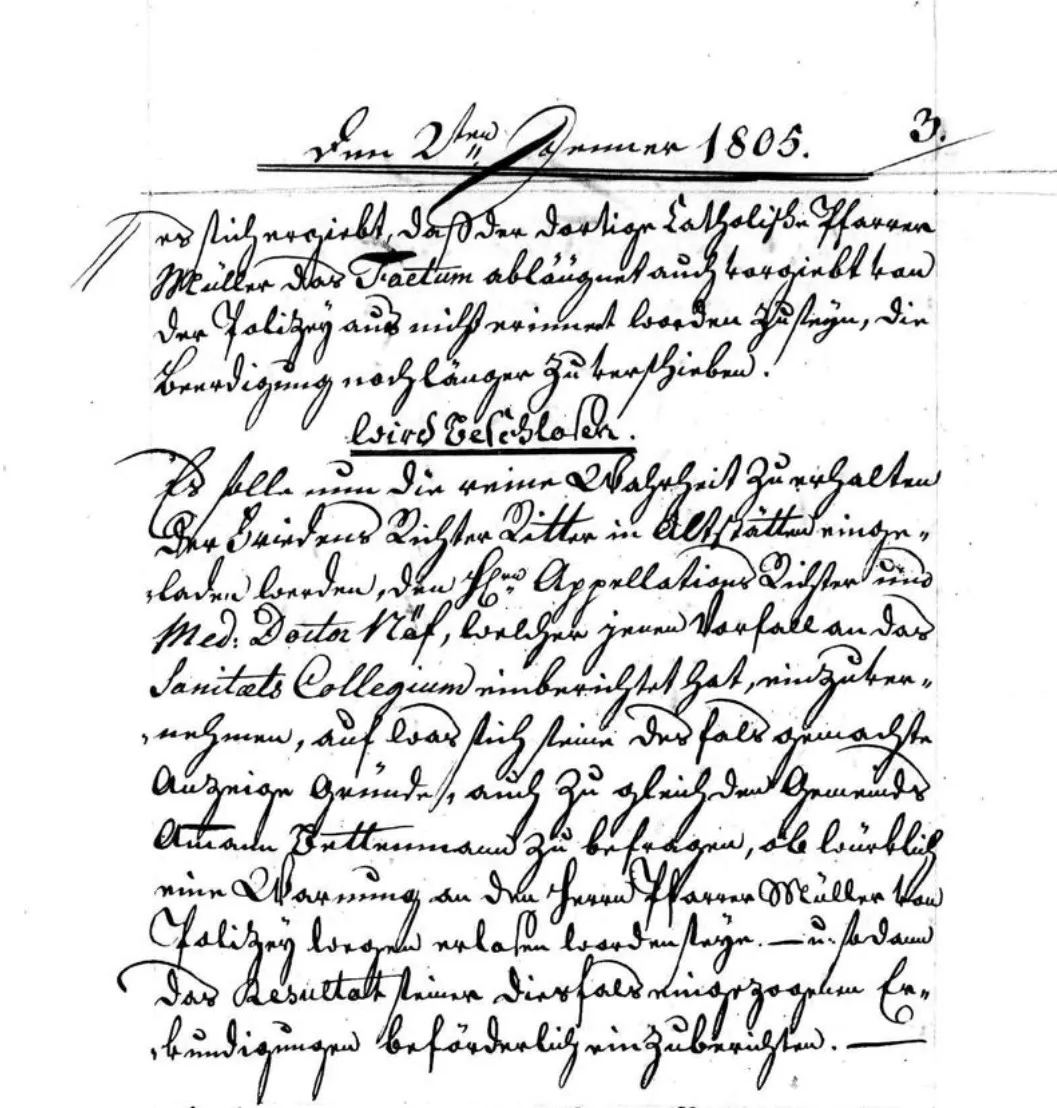
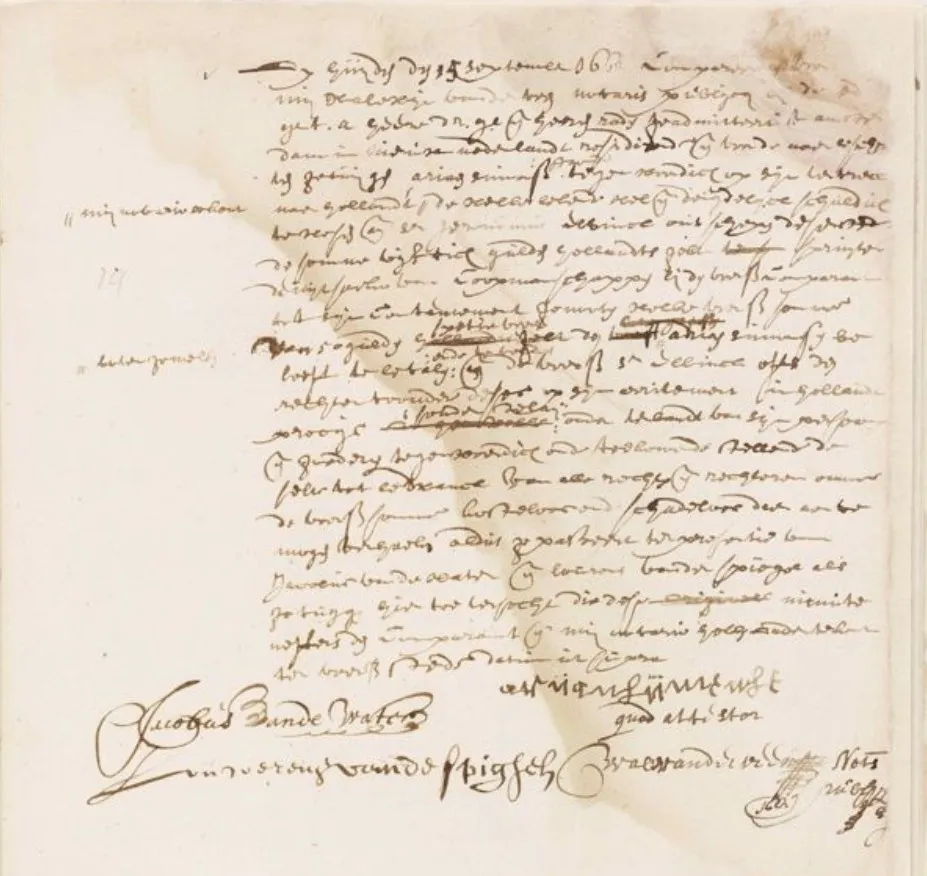
Historical scripts (Kurrent, Secretary Hand, Copperplate) use letterforms absent from modern OCR training sets
Abbreviations, ligatures, and superscript conventions in historical manuscripts have no equivalent in print
Document degradation — faded ink, bleed-through, foxing — compounds the challenge beyond what rule-based systems handle
The solution
How Does HTR Work? AI Handwriting Recognition Explained
Handwritten Text Recognition uses deep neural networks — typically a combination of convolutional neural networks (CNNs) and recurrent neural networks (RNNs) — to learn the visual patterns of handwriting directly from labelled examples. Rather than relying on predefined rules about what letters look like, an HTR model is trained on thousands of images paired with their correct transcriptions (called "ground truth"). Through this training, the model learns to recognise not just individual characters, but sequences of connected strokes, contextual letter shapes, and the spatial relationships between text elements on a page.
Layout analysis detects text regions, lines, and structural elements (columns, tables, marginalia) on the page
Line segmentation isolates individual text lines from the detected layout
The neural network processes each line image and predicts a sequence of characters, considering context from surrounding strokes
Language modelling and post-processing refine the output, resolving ambiguous characters using statistical patterns
Confidence scores are assigned to each predicted character and line, enabling targeted quality review
Addres to dear Isabella on the Authors
recovery
O Isa pain did visit me
I was at the last extremity
How often did I think of you
I wished your graceful form to view
To clasp you in my weak embrace
Indeed I thought Id run my race
Good Care Im sure was of me taken
But indeed I was much shaken
At last I daily strength did gain
HTR vs OCR
Handwritten Text Recognition vs. Optical Character Recognition
HTR and OCR are related technologies but address fundamentally different challenges. Understanding the distinction is important when evaluating tools for historical document processing.
| Feature | HTR (Handwritten Text Recognition) | Standard OCR |
|---|---|---|
| Designed for | Handwritten and cursive text | Printed and typewritten text |
| Character segmentation | Not required — processes connected strokes as sequences | Requires isolating individual characters |
| Historical scripts | Kurrent, Secretary Hand, Copperplate, and 100+ more | Limited or no support |
| Training approach | Deep learning on labelled handwriting samples (ground truth) | Rule-based pattern matching or print-trained models |
| Adaptability | Custom models can be trained for specific hands or scripts | Generally fixed — cannot adapt to new handwriting styles |
| Accuracy on handwriting | Typically 90–98% character accuracy with trained models | Often below 50% on cursive or historical handwriting |
| Layout analysis | Handles complex layouts: columns, tables, marginalia | Basic — assumes simple left-to-right text flow |
| Connected scripts | Yes — Arabic, Hebrew, cursive Latin scripts | Limited or unsupported |
| Degraded documents | Robust — trained on real historical documents with damage | Performance degrades significantly |
| Confidence scoring | Per-character and per-line confidence scores | Varies — often absent or unreliable |
Comparison reflects general capabilities of HTR systems (including Transkribus) versus standard OCR engines. Specific results depend on document type, model selection, and document condition.
Coverage
What Scripts, Languages, and Centuries Does HTR Support?
Modern HTR platforms — Transkribus in particular — support a remarkably broad range of scripts, languages, and historical periods. The key is the availability of trained models. Because HTR models learn from examples rather than rules, any script for which sufficient training data exists can be supported. Transkribus offers over 300 public models contributed by researchers and institutions worldwide, covering documents from the 9th century to the present day.
Latin scripts: modern and historical variants including Kurrent, Sütterlin, Secretary Hand, Copperplate, Humanistic, and Gothic cursive
Non-Latin scripts: Arabic, Hebrew, Greek, Cyrillic, Devanagari, Chinese, Japanese, and more — with models available or trainable
100+ languages represented in the public model catalogue, from German and English to Finnish, Hungarian, and Ottoman Turkish
Time span from medieval manuscripts (9th century) through early modern administrative records to 20th-century correspondence
Mixed-script documents: models can handle pages containing multiple scripts (e.g., Latin headings with Kurrent body text)


Who uses HTR
Handwritten Text Recognition Technology in Practice
HTR has moved beyond the experimental stage. It is now a production tool used across the humanities, cultural heritage, and information science. Researchers use it to build searchable corpora from manuscript collections. Archives use it to process backlogs of undigitised holdings. Libraries use it to make special collections discoverable. The technology is particularly transformative in contexts where the volume of handwritten material makes manual transcription economically impossible.
Digital humanities researchers transcribing correspondence, diaries, and literary manuscripts for scholarly editions
National and municipal archives processing administrative records, court documents, and civic registers at scale
Libraries and special collections making finding aids and catalogue records searchable and discoverable
Genealogists reading parish registers, census returns, and civil records in historical scripts
Cultural heritage projects digitising endangered manuscript collections before physical deterioration
Beyond recognition
The Full Pipeline: From Handwritten Document to Structured Data
Handwritten text recognition is one step in a larger document processing pipeline. A complete workflow begins with digitisation (scanning or photography), proceeds through layout analysis and text recognition, and continues into post-processing: entity recognition, metadata extraction, structured export, and publication. Transkribus integrates all of these stages into a single platform, so researchers do not need to stitch together separate tools for each step.
Layout analysis: automatic detection of text regions, columns, tables, headings, and marginalia
Text recognition: HTR converts detected text lines into machine-readable characters
Custom model training: fine-tune models on your specific manuscript type for higher accuracy
Entity recognition and tagging: identify persons, places, dates, and other named entities in the transcribed text
Export as TEI-XML, PAGE XML, ALTO XML, searchable PDF, or plain text — ready for analysis, publication, or archival ingest
Frequently Asked Questions about Handwritten Text Recognition
OCR (Optical Character Recognition) was designed for printed text and works by matching individual character shapes to known typefaces. HTR (Handwritten Text Recognition) uses deep learning to process connected, variable handwriting as sequences of strokes rather than isolated characters. HTR can handle cursive scripts, historical hands, and the natural variation inherent in handwriting — tasks where standard OCR typically fails. In short: OCR reads print, HTR reads handwriting.
HTR models are trained on paired datasets called 'ground truth': images of handwritten text aligned with their correct transcriptions. The neural network learns to map visual patterns in the handwriting to character sequences. Training typically requires 50–100 transcribed pages for a custom model, though larger datasets improve accuracy. The model learns not just letter shapes but contextual patterns — how characters connect, common abbreviations, and script-specific conventions.
Accuracy is measured by Character Error Rate (CER) — the percentage of characters that differ between the HTR output and the correct text. Well-trained models on legible scripts routinely achieve CER below 5% (over 95% character accuracy). Challenging documents — heavily damaged, faded, or in unusual scripts — may yield CER of 10–15% before custom training. After fine-tuning a model on your specific document type, accuracy typically improves significantly.
HTR works on virtually any handwritten document for which a trained model exists or can be created: letters, diaries, parish registers, court records, administrative files, census returns, scientific notebooks, literary manuscripts, land deeds, and more. It also handles mixed documents containing both print and handwriting. The key requirement is a model trained on a similar script and document type.
Transkribus, the leading HTR platform, offers 50 free credits every month — enough to process approximately 50 pages. No credit card is required to start. Paid plans are available for researchers and institutions processing larger volumes. See plans and pricing for details.
A single page typically takes 15–30 seconds to process, depending on document complexity and the model used. Batch processing enables hundreds or thousands of pages to be queued and processed automatically. A 500-page manuscript can be transcribed in under an hour — work that would take weeks or months by hand.
Transkribus offers over 300 public HTR models covering 100+ languages and scripts. These include Latin-script languages (English, German, French, Spanish, Dutch, Swedish, and many more), as well as Arabic, Hebrew, Greek, Cyrillic, and other writing systems. Historical scripts such as Kurrent, Sütterlin, Secretary Hand, and Copperplate are well represented. If a model for your specific script does not exist, you can train a custom model.
See HTR in action
Explore use-case guides
See how HTR is applied to real documents: Church records · Census records · Medieval manuscripts · Archival backlog reduction · Create searchable PDFs
